Vivo X300 Ultra: the most ambitious camera phone of 2026 hits the world with interchangeable ZEISS lenses

Index
vivo has just opened the black box. After two generations (X100 Ultra and X200 Ultra) trapped in the Chinese market, the company is today launching globally the X300 Ultra — the first X Ultra officially arriving in Europe, Asia, Brazil, and much of LATAM via official import. The price is steep: €1,999 for the 16 GB / 1 TB version, or up to €3,166 with the full 400 mm teleconverter kit and video cage. In return, it offers something no traditional flagship has: a ZEISS Master Lenses system with three primes (14 mm, 35 mm, 85 mm), two physical optical teleconverters (200 mm and 400 mm), and 4K 120fps Dolby Vision video in all three rear cameras — something neither the iPhone 17 Pro Max nor the Galaxy S26 Ultra match.
This is the smartphone that most closely resembles a professional photographic system we've seen to date. The question is whether this positioning is enough for it to compete with Samsung and Apple in a market where distribution and ecosystem weigh as much as hardware.
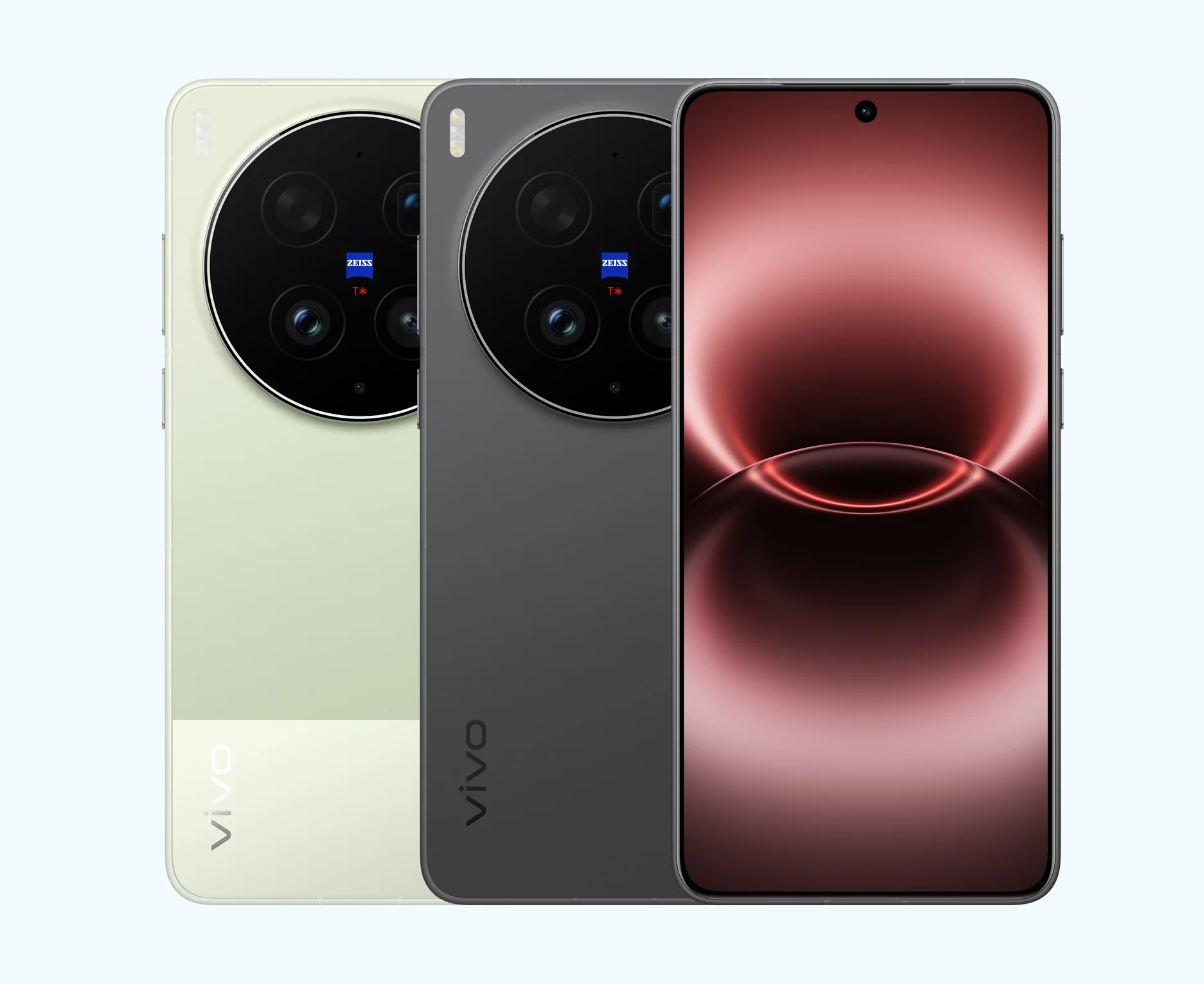
Design: DECO inspired by pancake lenses
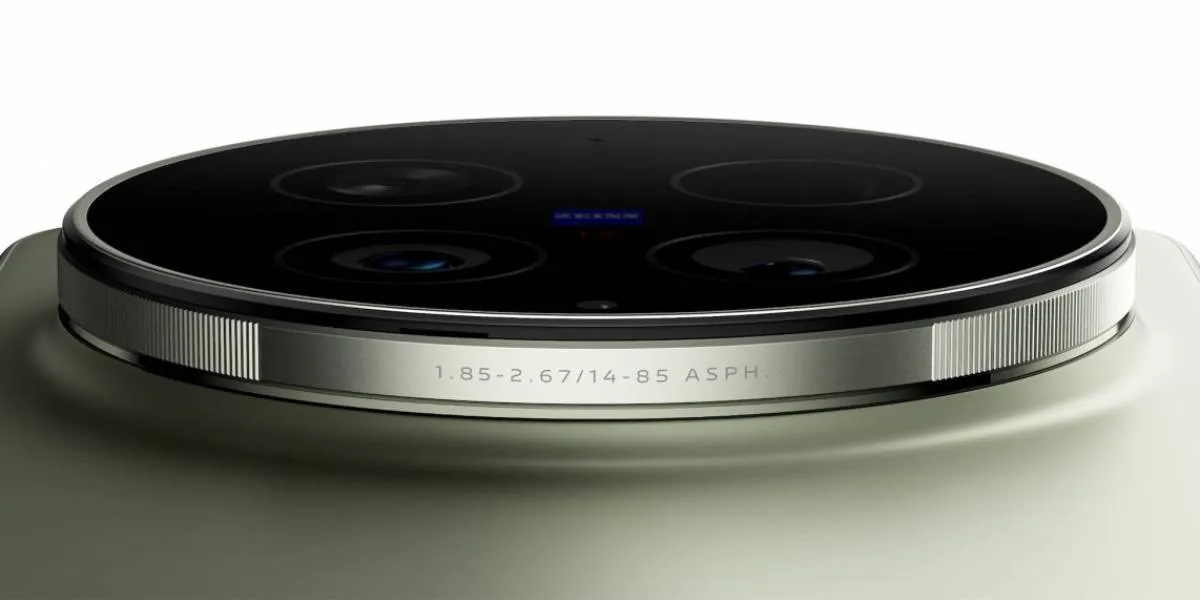
The visual language has changed. The X300 Pro had a discreet camera module; the Ultra turns it into absolute protagonism. The knurled silver ring mimics the adjustment wheels of a real ZEISS lens, and the inscription 1.85-2.67/14-85 ASPH engraved on the metal — the same nomenclature ZEISS uses on its camera optics — sets the tone: it's not a smartphone with a good camera, it's a body meant to carry optics.
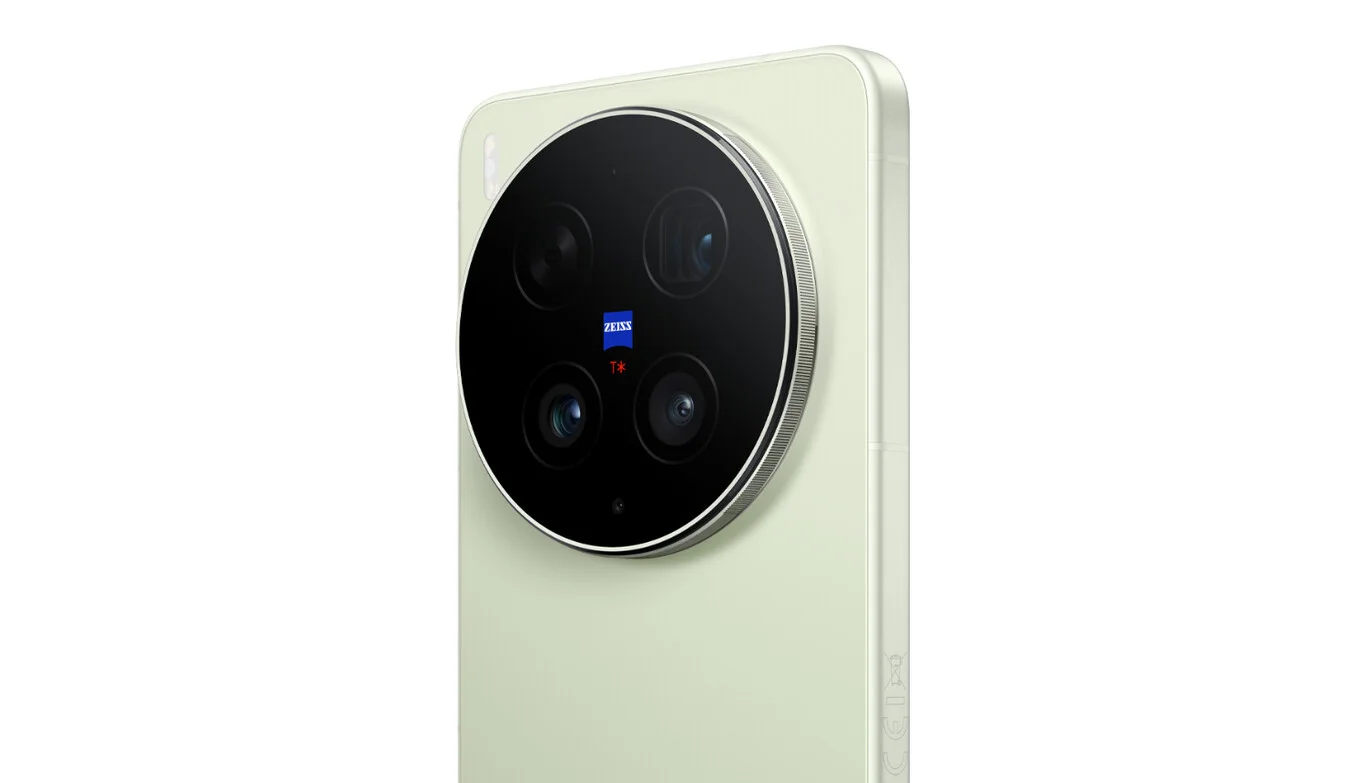
The device comes in three official colors: Film Green (olive green with an oily finish, designed to evoke vintage lenses), Silver Tone (reflective texture), and Black (standard). In Europe, only Black and Green are available at launch. The dimensions are 162.98 × 76.81 × 8.19 mm in Black, and 8.49 mm in Green and Silver due to the extra coating. Weight: 232 g in Black, 237 g in Green and Silver. It is not light by 2026 standards, but it is offset by the centered module's ergonomics and well-distributed weight.
IP68 / IP69 certification means dust resistance, freshwater immersion up to 1.5 m for 30 minutes, and protection against high-pressure and high-temperature water jets. The only configuration available in Europe at launch is 16 GB of RAM / 1 TB of UFS 4.1 storage — there is no 12/256 variant as initially leaked.
ZEISS Master Color Display: 6.82" at 144 Hz
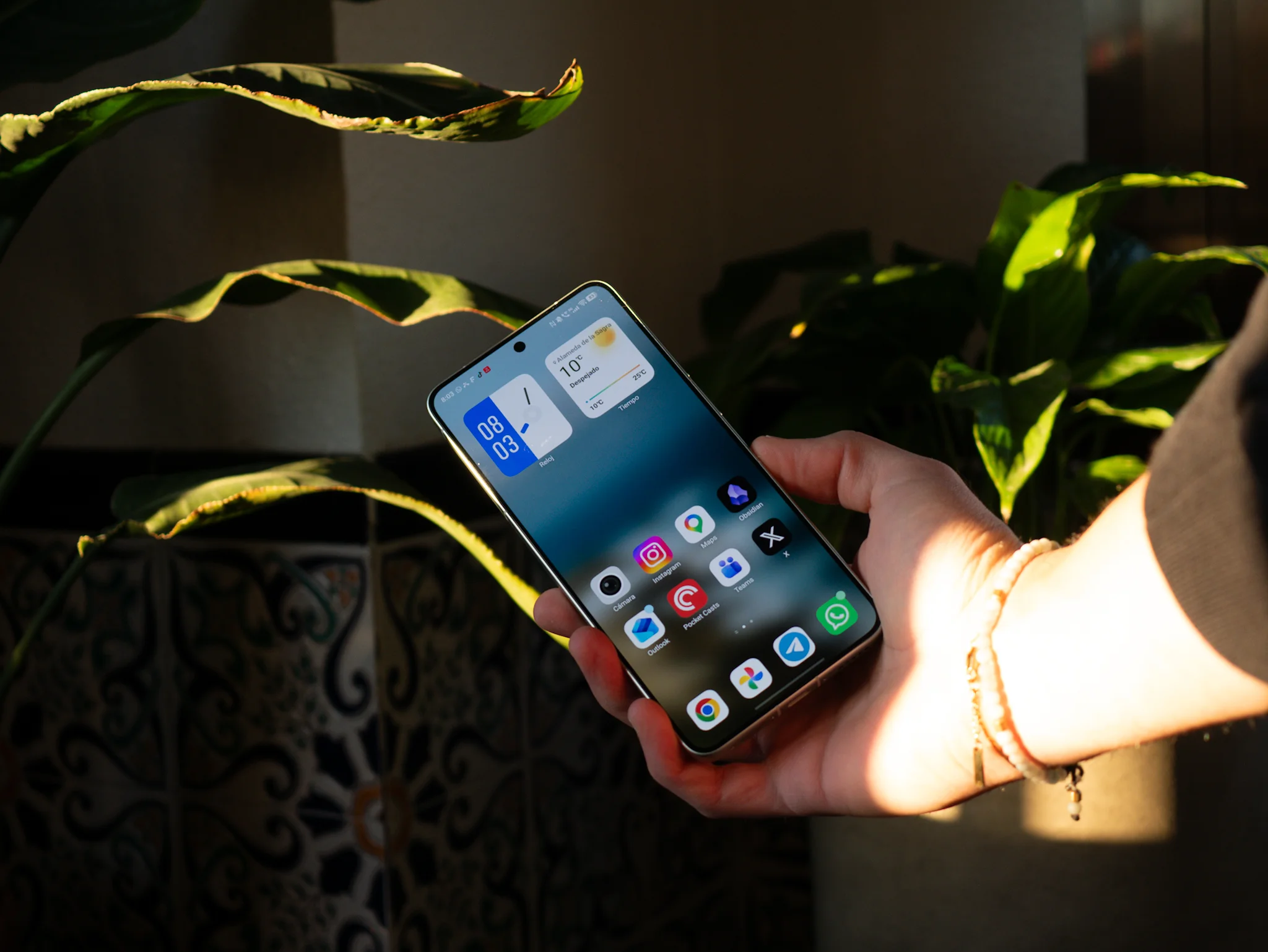
At the front, a 6.82-inch LTPO AMOLED panel with 2K resolution, adaptive refresh from 1 to 144 Hz, and 2,160 Hz PWM for eye care during long sessions. Peak brightness reaches 6,000 nits in HDR modes — one of the highest on the market alongside the Galaxy S26 Ultra. It supports HDR10+, Dolby Vision, and HDR Vivid.
What sets it apart is the ZEISS Master Color Display with Ultra XDR: a 10-bit end-to-end pipeline ensuring that what you see on the screen is what the sensors captured. In practice, this means that if you shoot in LOG or Dolby Vision, the preview shows the image with the real curve — not an SDR approximation. It’s the kind of detail only professional workflow users care about, but it defines the difference between a "common" camera phone and one designed for creation.
Hardware: Snapdragon 8 Elite Gen 5 and Ice Pulse cooling
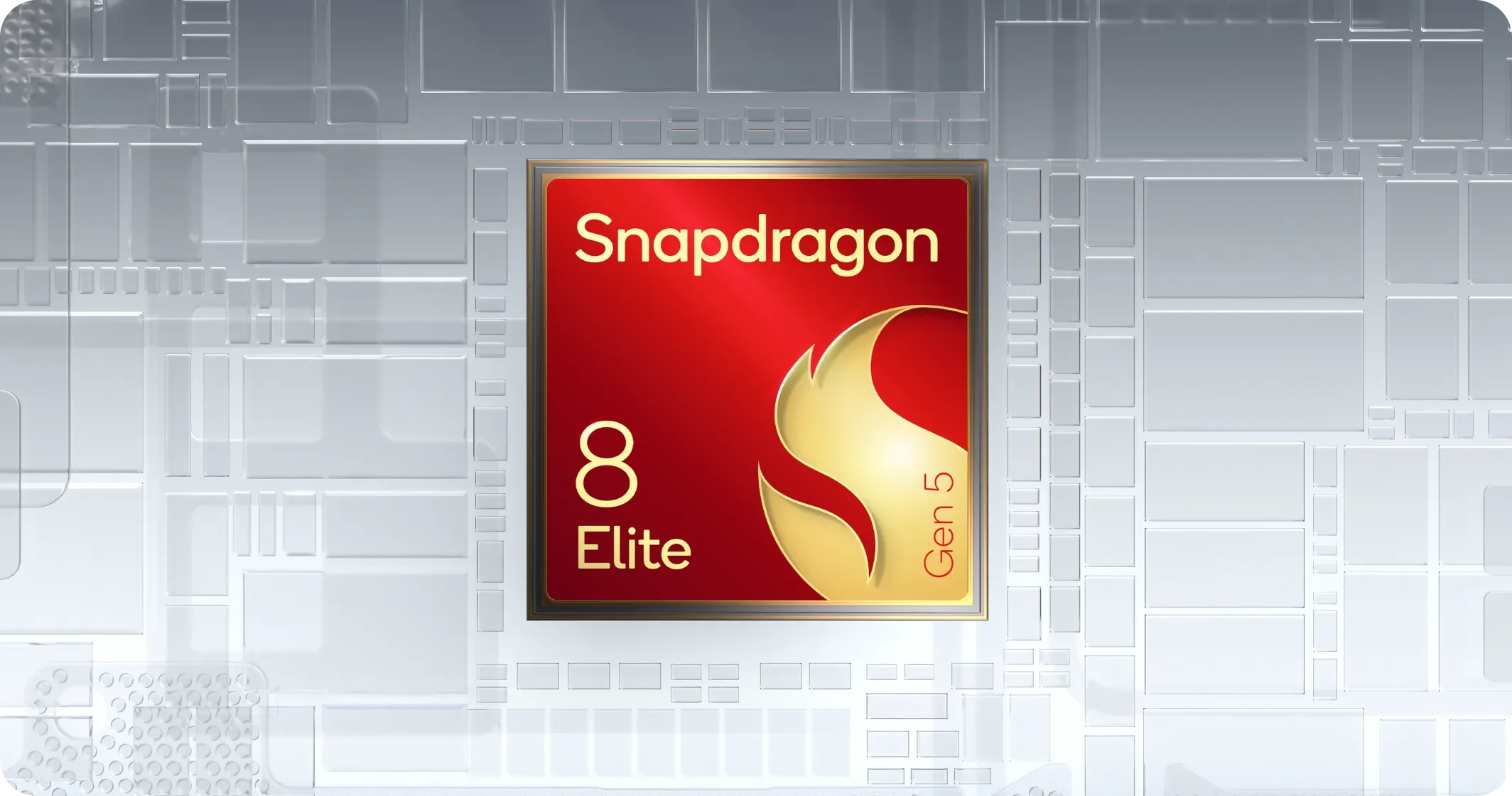

Here's where we see the first notable difference from the X300 and X300 Pro: while those two use the MediaTek Dimensity 9500, the Ultra packs the Snapdragon 8 Elite Gen 5 from Qualcomm. The decision makes sense: the SD 8 Elite Gen 5 has a more robust ISP for multi-frame RAW processing and better support for 10-bit Log video pipelines, aligning with the model's photographic focus.
It is accompanied by 16 GB of LPDDR5X and 1 TB of UFS 4.1. But what's surprising is the cooling: vivo redesigned the Ice Pulse Fluid VC system, with a vapor chamber 22% larger than that of the X300 Pro and an optimized liquid return channel that improves heat dissipation by 14%. For shooting 4K 120fps Log with an 85 mm periscope during long sessions, that thermal margin is not cosmetic.
Battery: 6,600 mAh with a European asterisk
The global and Chinese model brings 6,600 mAh with BlueVolt silicon-carbon technology — one of the highest capacities in the flagship segment. But there's a catch: the European version comes with 6,400 mAh, 200 mAh less, due to air transport regulations limiting the energy density allowed in devices sold in the EU. It's not dramatic, but it's information that doesn't appear prominently in official marketing.
Charging is 100 W wired and 40 W wireless, with reverse wireless charging included. In real numbers, the 100 W charger fills the device from 0 to 100% in about 40-45 minutes — not the fastest on the market (the Oppo Find X9 Pro does something similar with 80 W for a larger battery) but remains in the upper echelon.
ZEISS Master Lenses System: the ecosystem that sets it apart
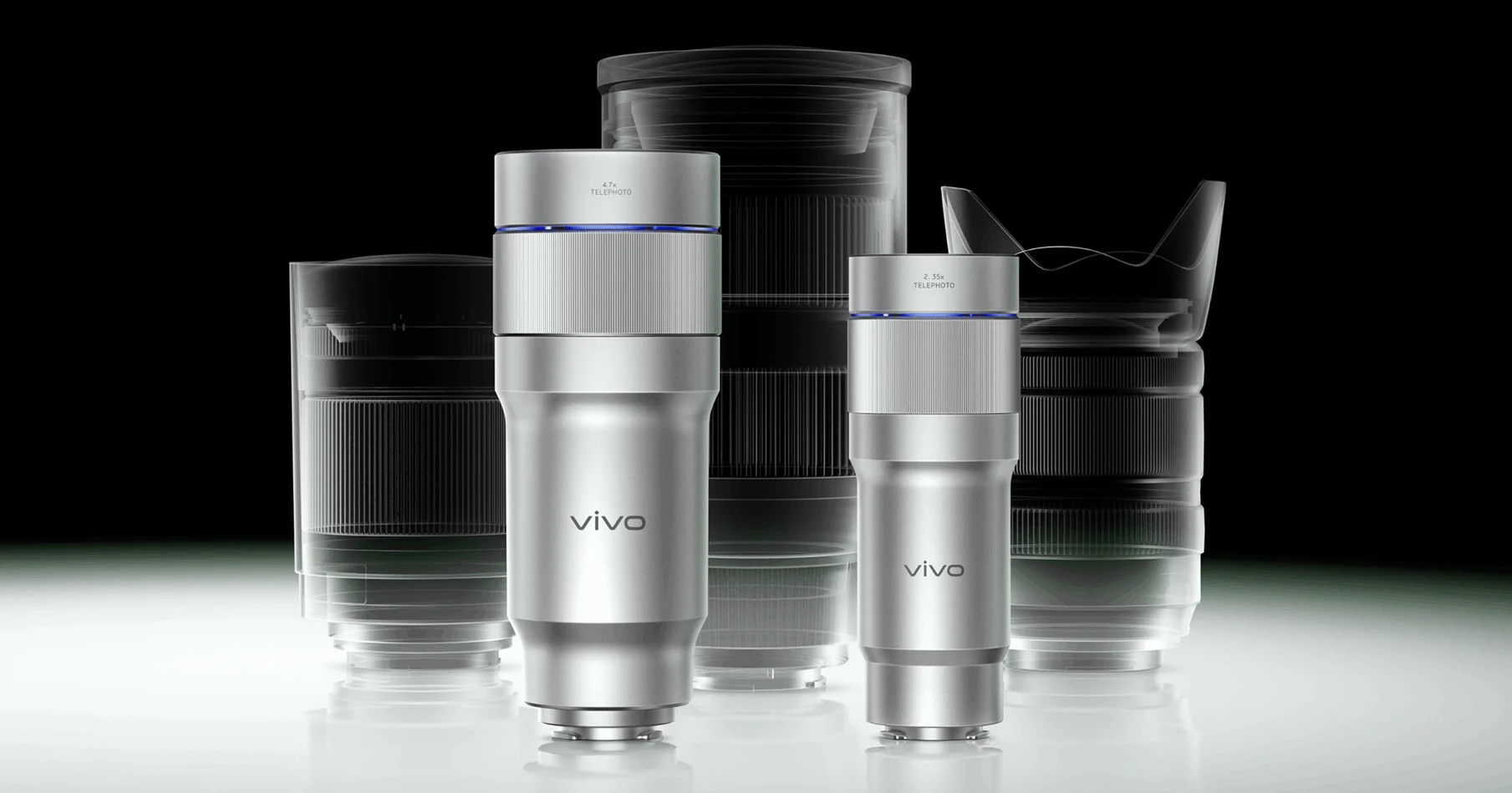
Here lies the product's thesis. These aren't "three rear cameras" — they are three prime lenses co-engineered with ZEISS, each with a fixed focal length and designed for specific use, plus two physical teleconverters that mechanically mount onto the body.
The three prime lenses:
- 14 mm ultra-wide: Sony LYTIA 818 of 50 MP, f/2.0, 116° field of view, OIS. vivo claims it optically corrected the classic ultra-wide distortions in smartphones instead of doing it via software — the first ultra-wide that moves to main camera level in quality.
- 35 mm main: Sony LYTIA 901 of 200 MP, 1/1.12" sensor (the largest ever put in a smartphone), f/1.85, OIS gimbal. It's the direct successor to the X200 Ultra sensor, with greater light capture and lower internal reflectivity.
- 85 mm telephoto periscope: Samsung HP0 of 200 MP, 1/1.4" sensor, f/2.67, OIS gimbal, 3.7× optical, tracking AF at 60 fps. The key element: it meets the ZEISS APO standard, the same used by professional optics to eliminate chromatic aberration.
The two physical teleconverters:
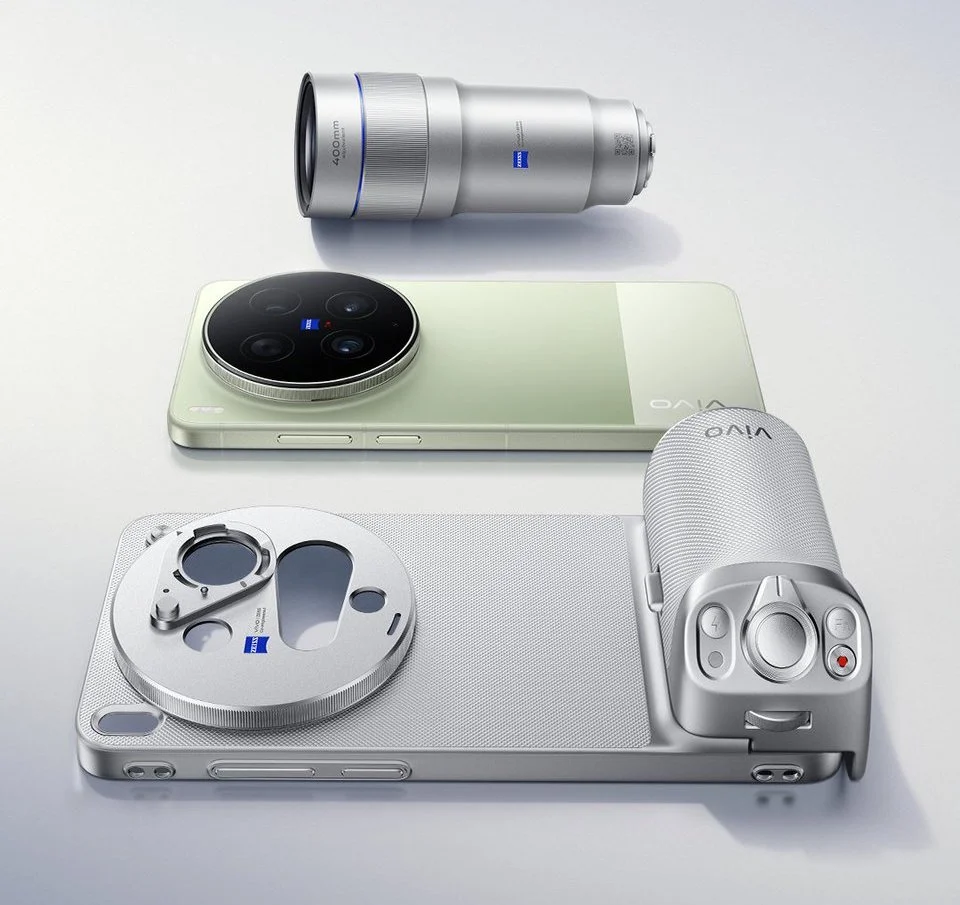
- Gen 2 Teleconverter (200 mm equivalent): Kepler optical design, reduced from 210 g to 153 g compared to Gen 1. It mounts over the 85 mm and extends the focal to 200 mm while maintaining 200 MP output.
- Gen 2 Ultra Teleconverter (400 mm equivalent): global debut of a 400 mm teleconverter in a smartphone. Kepler construction with 15 high-transmittance glass elements, gimbal OIS, AF tracking at 60 fps, APO standard. On paper, it does what Sony or Canon 400 mm f/4 lenses do — in an adapter that screws onto a phone.
What's interesting isn't each isolated component. It's the concept. vivo is de facto constructing a "proprietary mount" for smartphones — something that did not exist until the traditional interchangeable optics market validated it with Sony E, Canon RF, and Nikon Z. Resultant weight of the X300 Ultra with the Gen 2 teleconverter mounted: ~390 g. A Sony RX100 VII weighs 302 g. When vivo sells the complete kit with video cage, we're talking about equipment closer to a mirrorless than a smartphone.
The friction point is mechanical. The teleconverters screw on via a bayonet onto a special case (the Photography Kit case), not directly onto the phone module. This introduces a failure point that traditional camera mounts resolved with robust solid metal bayonets with dedicated electrical contacts. vivo solved it with engineering, but it’s a vector that didn't exist before and we'll have to see how it ages with intensive use.
Professional video: 4K 120fps Log in all three lenses
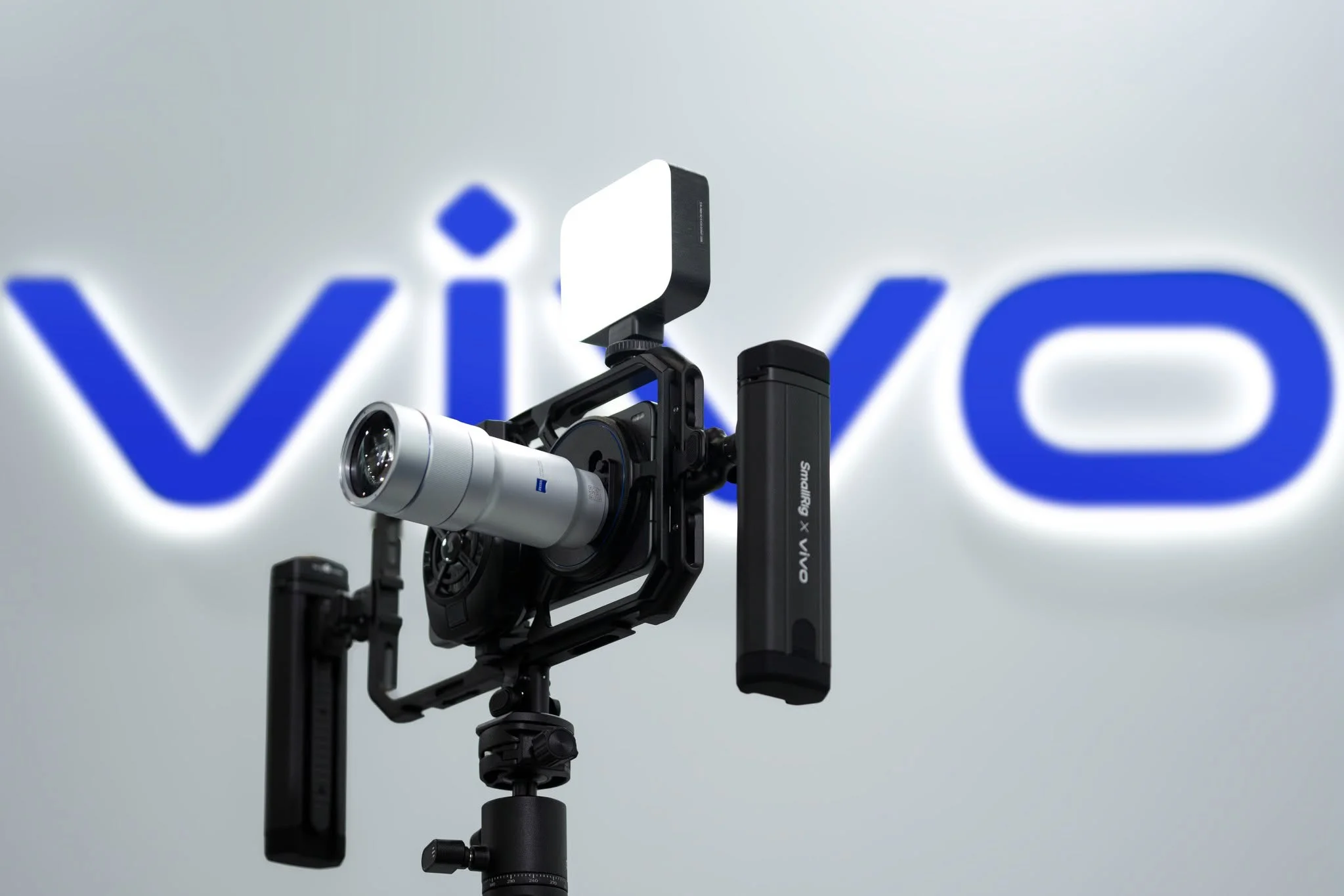
Here is the feature neither Apple nor Samsung match. The X300 Ultra records 4K 120fps 10-bit Log and Dolby Vision HDR on all three rear cameras. The iPhone 17 Pro Max does 4K 120fps Dolby Vision but only on the main one. The Galaxy S26 Ultra reaches 8K 30fps and 4K 60fps, with no LOG on any. This matters because changing focal length during multi-clip recording without breaking the color pipeline is what separates a pro gear from an amateur one.
Adds:
- Native support for APV 422 10-bit (high-efficiency codec like ProRes).
- Compatibility with ACES workflows for professional color grading.
- Custom 3D LUT import.
- Quadruple microphone array with directional beam forming.
- Cinematic modes 24 fps (film) and 60 fps (modern).
For the complete kit, vivo sells a SmallRig Pro cage at €499 (€299 in the pre-order bundle) with lateral handles, slot for external monitor, and mount for LED light. It's the first smartphone coming with an official rig at the level of ergonomics and modularity of a mirrorless.
The X300 line: which of the three to choose?
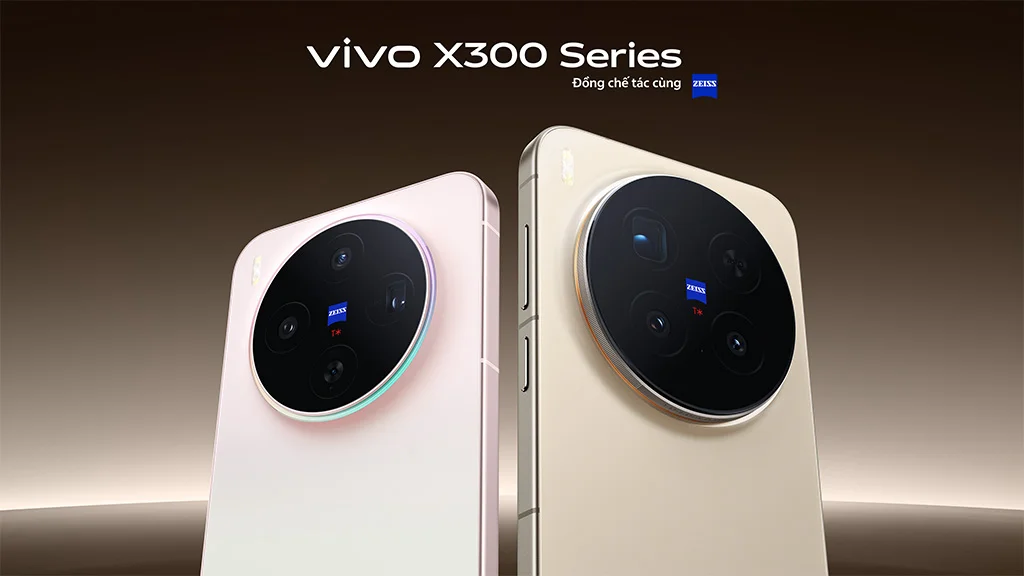
My reading: if you're evaluating the entire line, the X300 Pro remains the sweet spot. Same 200 MP telephoto sensor as the Ultra, optional 2.35× teleconverter if you want extended zoom, almost identical battery, and costing a third less. The Ultra is only justified if the workflow is professional photography or video where the physical lens system and multi-lens LOG video define your work.
Vivo X300 Ultra vs global competition
Verdict: the best camera phone of 2026?
Yes, with conditions. The X300 Ultra is the smartphone with the best cameras in the global market today, measured by hardware (largest main sensor, largest telephoto, multi-lens LOG video) and optical ecosystem — physical 200 mm and 400 mm teleconverters that no rival offers. For professional photo or video creators seeking a portable modular system, there's no alternative.
But it’s not the best global phone for most. At €1,999 for the base version (without teleconverter), you're paying €500 more than a Galaxy S26 Ultra or an iPhone 17 Pro Max, with less support network, no USA or UK availability at launch, and with OriginOS 6 that — while based on Android 16 and featuring Google Services — doesn’t integrate into the iCloud or Samsung Account ecosystems that the two leaders have honed over years.
The most direct competition is the Oppo Find X9 Pro: physical Hasselblad 300 mm teleconverter, Dimensity 9500, 7,500 mAh battery, and €800 cheaper. The choice between the two comes down to color science (ZEISS vs Hasselblad), video priority (the X300 Ultra wins for multi-lens LOG), and how important reaching 400 mm optical is to you.
The historical aspect is something else: it’s the first time vivo brings its Ultra to the global market. If the strategy works — if they find buyers willing to pay a premium price for an optical ecosystem — the X400 Ultra will arrive as a reference from day 1 of the 2027 cycle, not as a distant teaser from the Chinese market. For the experimental flagship market, that’s the most significant news.
Vivo X300 Ultra
El primer X Ultra de Vivo que se lanza globalmente. Sistema ZEISS Master Lenses con tres primes (14, 35, 85 mm), dos teleconvertidores físicos (200 y 400 mm) y video 4K 120fps 10-bit Log en las tres cámaras traseras.
Pros
- Sistema ZEISS Master Lenses con tres primes (14, 35, 85 mm) y dos teleconvertidores físicos, único en un smartphone.
- Video 4K 120fps 10-bit Log y Dolby Vision en las tres cámaras traseras, algo que no iguala ningún flagship global.
- Sensor principal Sony LYTIA 901 de 1/1,12″, el más grande jamás puesto en un smartphone.
- Teleconvertidor Gen 2 Ultra de 400 mm con estándar APO y AF tracking a 60 fps.
- Snapdragon 8 Elite Gen 5 con refrigeración Ice Pulse optimizada para sesiones largas de grabación.
Cons
- Precio global de €1.999, unos €500 más que el Galaxy S26 Ultra o el iPhone 17 Pro Max.
- Batería reducida a 6.400 mAh en la versión europea, 200 mAh menos que el modelo global.
- Sin disponibilidad oficial en Estados Unidos ni Reino Unido al lanzamiento.
- Solo una configuración al lanzamiento (16 GB / 1 TB), sin opción más económica.
- OriginOS 6 todavía no integra Google Services al nivel de One UI o iOS.
Información basada en specs oficiales. El autor no tuvo acceso físico al producto para este reporte.
Comments (0)
No comments yet. Be the first!
You might also like

Oppo Find X9 Pro: In-Depth Review and the Madness of Its Optical Teleconverter
In-depth review of the new Oppo Find X9 Pro. We tested its incredible 7500 mAh battery, the Dimensity 9500 chip, and the crazy Hasselblad optical teleconverter.
13 April 2026
Recording in 8K from an iPhone: the 17 Pro would make it possible
The iPhone 17 Pro aims to revolutionize mobile video with 8K recording, a new camera module, and 48MP sensors in all lenses.
11 April 2025
Price Leak for the Foldable iPhone Ultra: Prepare Your Savings Because It's Going to Break Records
Apple delays the iPhone 18 to bet everything on the foldable iPhone Ultra. Self-repairing screen, 2TB of storage, and a price exceeding $2,000.
10 April 2026
iPhone 17 Pro and Pro Max: Power Without Limits
We thoroughly analyze the new iPhone 17 Pro. Unibody design, A19 Pro chip, 48 MP cameras with 8x zoom, and the largest battery in Apple's history.
27 September 2025