

Index
Editorial Disclosure
Information based on official specs. The author has not had physical access to the product for this report.
Information based on official specs. The author has not had physical access to the product for this report.
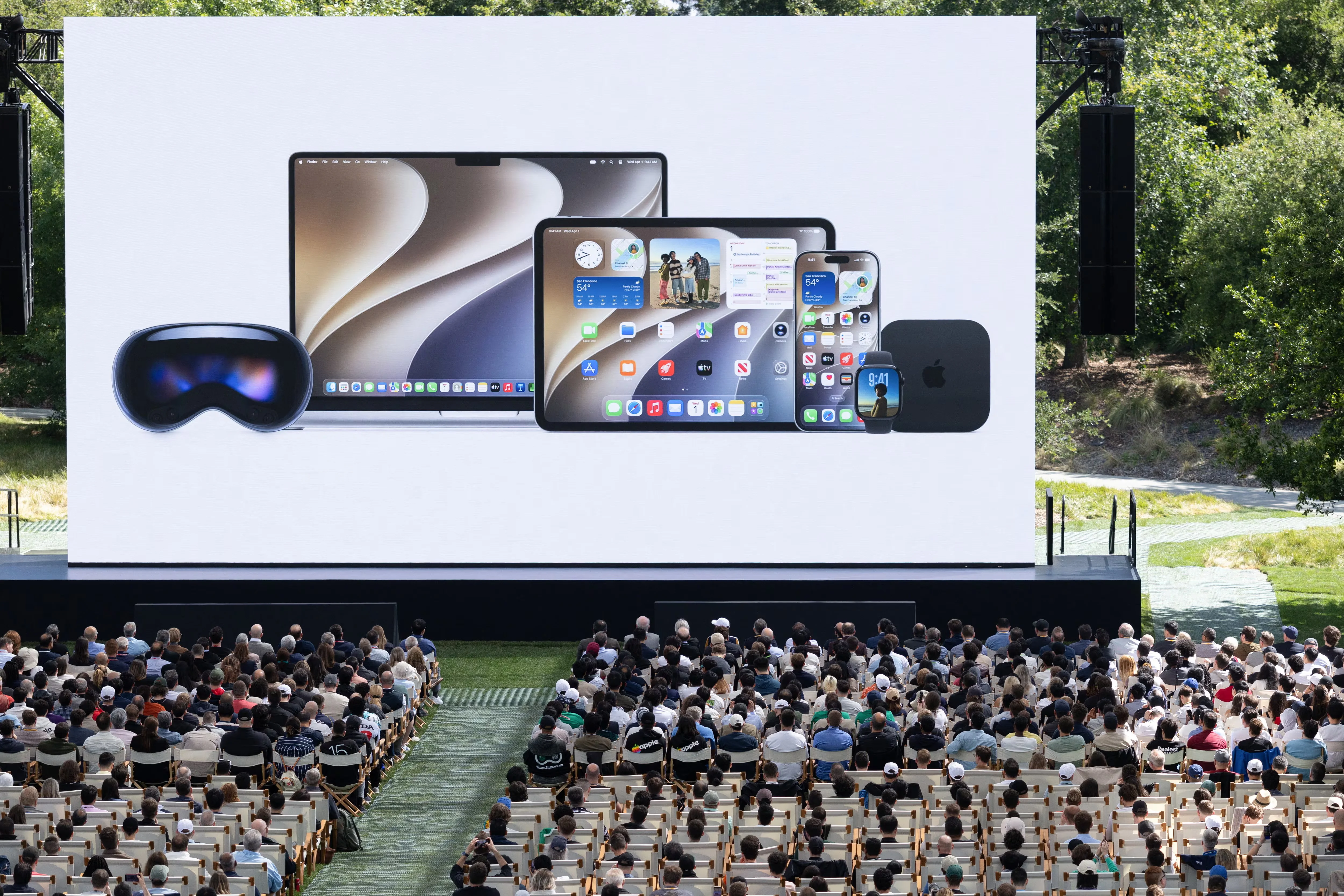
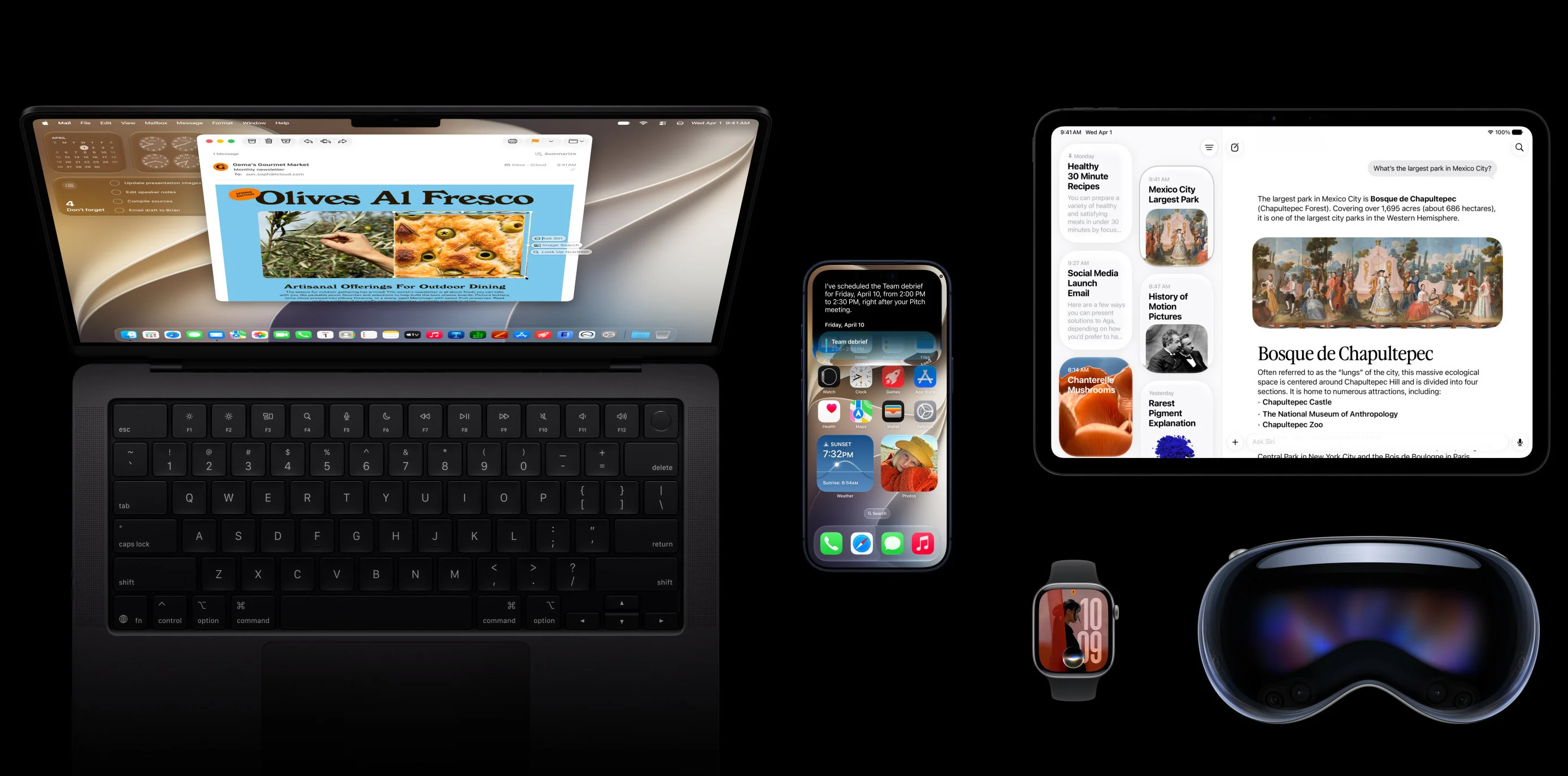
Apple opened WWDC 2026 with the reset it had owed for two years: a Siri rebuilt from the ground up, renamed Siri AI, that becomes the center of gravity for all its software. This is not an isolated announcement for the iPhone. The new Siri runs through the five operating systems introduced —iOS 27, macOS 27, iPadOS 27, watchOS 27, and visionOS 27— and organizes them around the same idea: an intelligence that understands natural language, sees what is on screen, and acts based on the context you are in.
But the keynote delivered much more than Siri: a macOS that closes the Intel era, AI-powered photo editing on the iPad, a list of Apple Watch models left without an update, and Tim Cook’s farewell as CEO.
The new Siri understands far more natural language, follows you through complex conversations, and corrects itself on the fly. The deeper change is that it interconnects information from your apps, email, calendar, and photos: you can ask it to find an image based on a description or retrieve an address someone sent you in Messages. Processing happens primarily on your device and, when a task requires more power, scales to Private Cloud Compute —Apple’s private cloud— without storing your personal data.
It has also changed on the outside. Siri now lives in the Dynamic Island with customizable lights and colors, introduces more expressive voices with adjustable tone, and gets a dedicated app for resuming conversations. Apple says Siri is no longer a chatbot you open to ask something, but a part of the system that appears over any app and understands what you are doing.
Siri AI’s models are Apple’s own, trained with Gemini outputs on Google’s cloud infrastructure, but they are not the commercial Gemini product and they do not send your personal data to Google.
The limitation is that Siri AI launches only in English, with no confirmed date for Spanish, and it is not coming to the European Union or China.
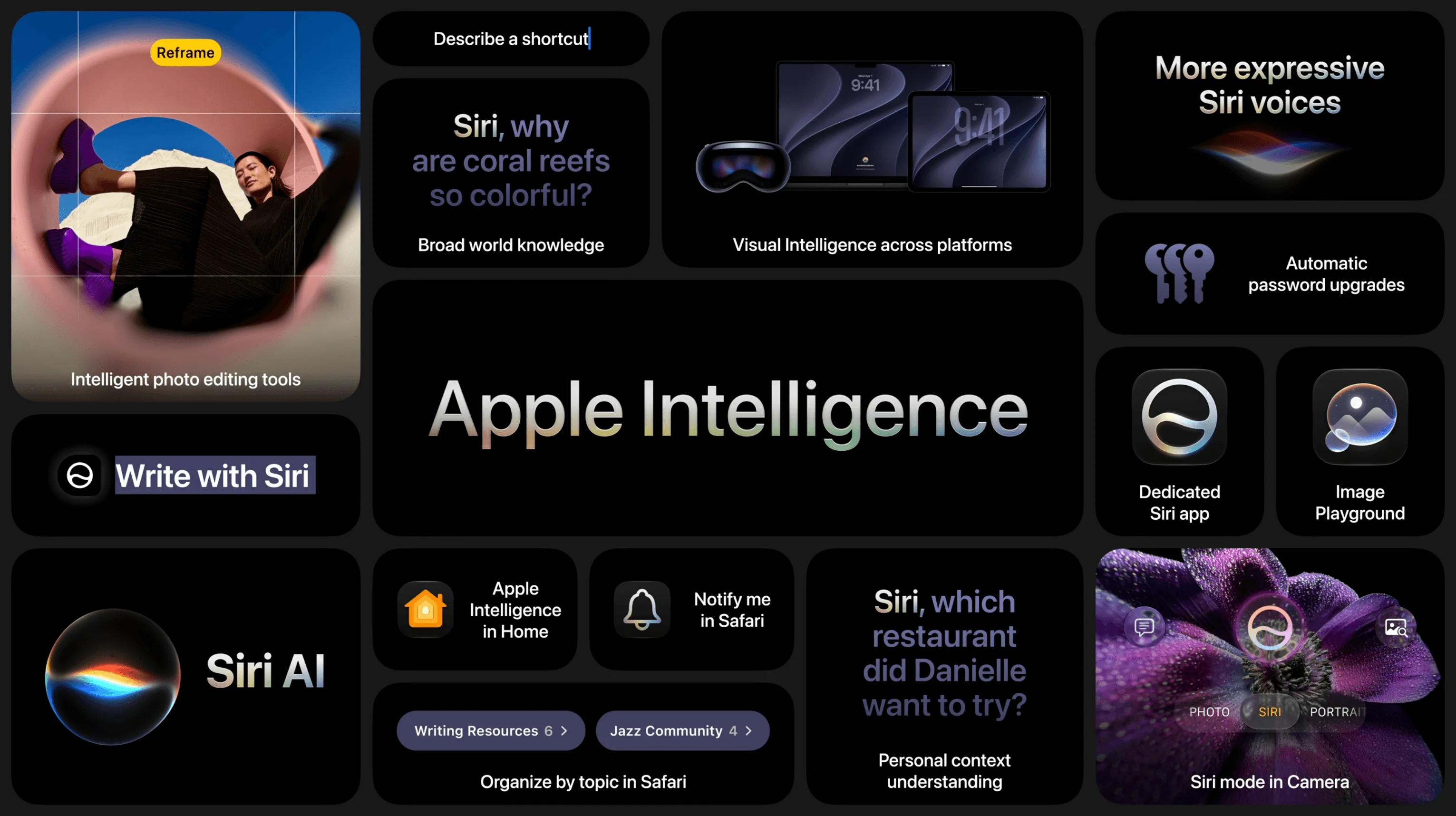
Apple Intelligence expanded across the entire system, not just Siri. Among the new features are photo editing tools that understand the image —reframing, expanding, and correcting by area—, Write with Siri for writing in any app, Visual Intelligence across more platforms, Image Playground for generating images, and the arrival of AI in Messages, Home, Safari, and even Siri in the camera.
One of the most useful features almost went unnoticed in the keynote: automatic password updates, which can change dozens of compromised passwords with a single tap.
The big news is compatibility: you can install it starting with the iPhone 11 and the second-generation iPhone SE. But Apple Intelligence and Siri AI features remain reserved for the iPhone 15 Pro and later models. Also, after complaints about iOS 26 battery consumption, this version focuses on stability and performance.
It closes a historic chapter: it is the first macOS that runs exclusively on Apple Silicon and leaves Intel-based Mac computers anchored to macOS 26, with three more years of security updates. It adds all the system-level AI and expands Liquid Glass to the Dock and to more native and third-party apps.
The iPad inherits Siri AI and, above all, AI photo editing tools designed for the screen and Apple Pencil: extending the edges of a photo, correcting perspective, or applying intelligent enhancements by area. We cover it in depth in the iPadOS 27 article.
Here comes the bad news: the list of watches left without the update is longer than the list of compatible models, and Siri AI does not even land on the watch within the European Union.
The details of which models are left out are in the watchOS 27 analysis.
The Vision Pro finally adds new languages, including Spanish, improves gaze control with notifications that react to where you are looking, and lets you answer iPhone calls from the headset. More in the visionOS 27 article.
Apple also updated tvOS 27 and brought the new Siri to Apple TV, although without the deeper changes seen on the other platforms.
The other half of the keynote was for the people who make the apps. Apple introduced the Foundation Models framework, which lets any developer use the on-device AI models inside their app, and Core AI, a layer that unifies access to that intelligence.
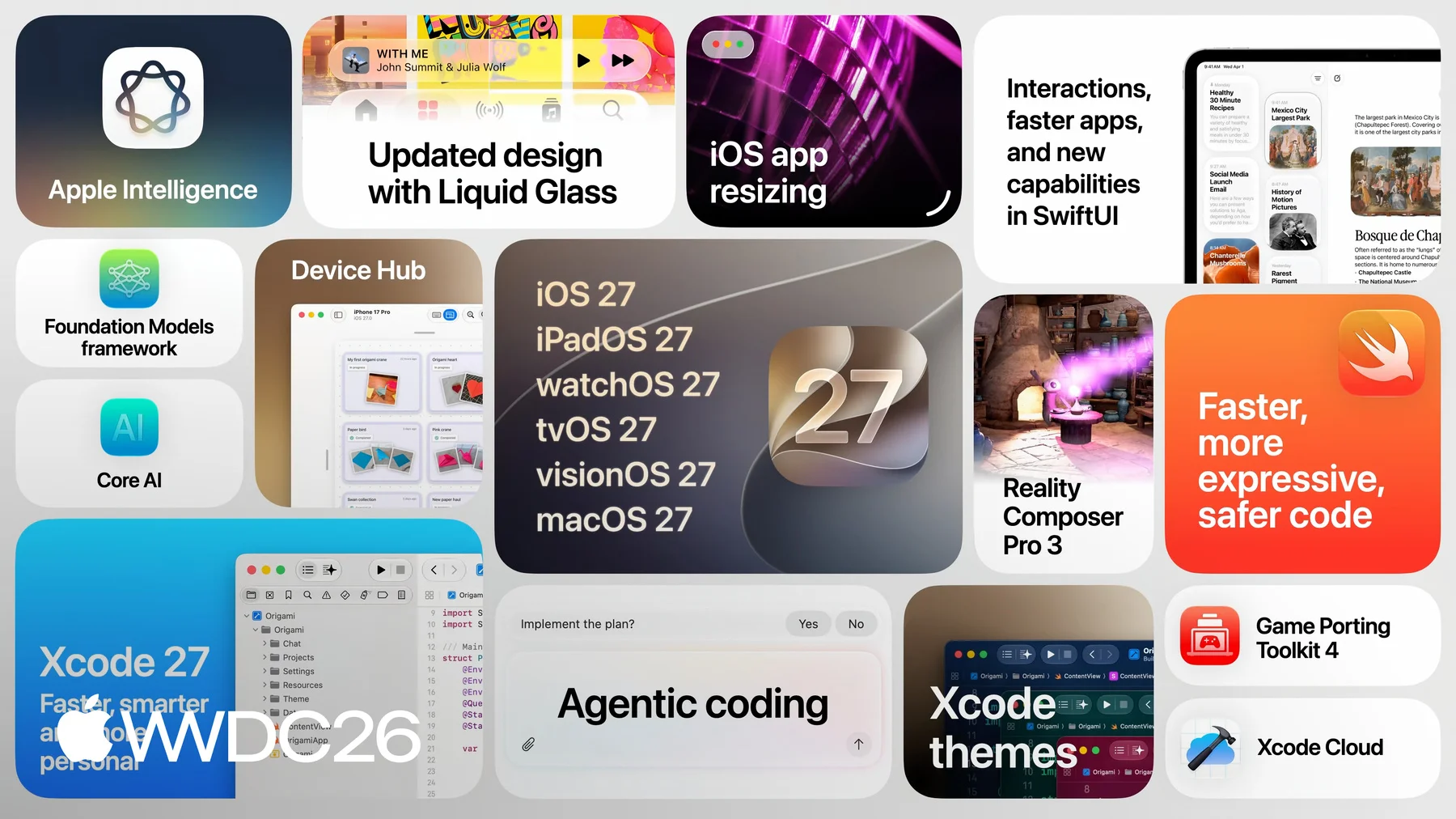
Xcode 27, its development environment, debuts agentic programming: you can ask it to implement a feature, and the editor writes and tests the code, in direct competition with tools like Claude Code. Apple also brought Liquid Glass and window resizing to apps, added customizable themes to Xcode, and introduced Swift improvements for writing code faster and more safely.
The foldable iPhone did not appear, but Apple did launch new foldable design APIs for developers, suggesting that a future iPhone with a flexible display could be on the way.
The other major absence was geographic. Europe and China will not get Siri AI, and Apple points directly to the Digital Markets Act as the reason for the European block. For LATAM, the obstacle is different: language.
We explain what we can expect in the region in this other article.
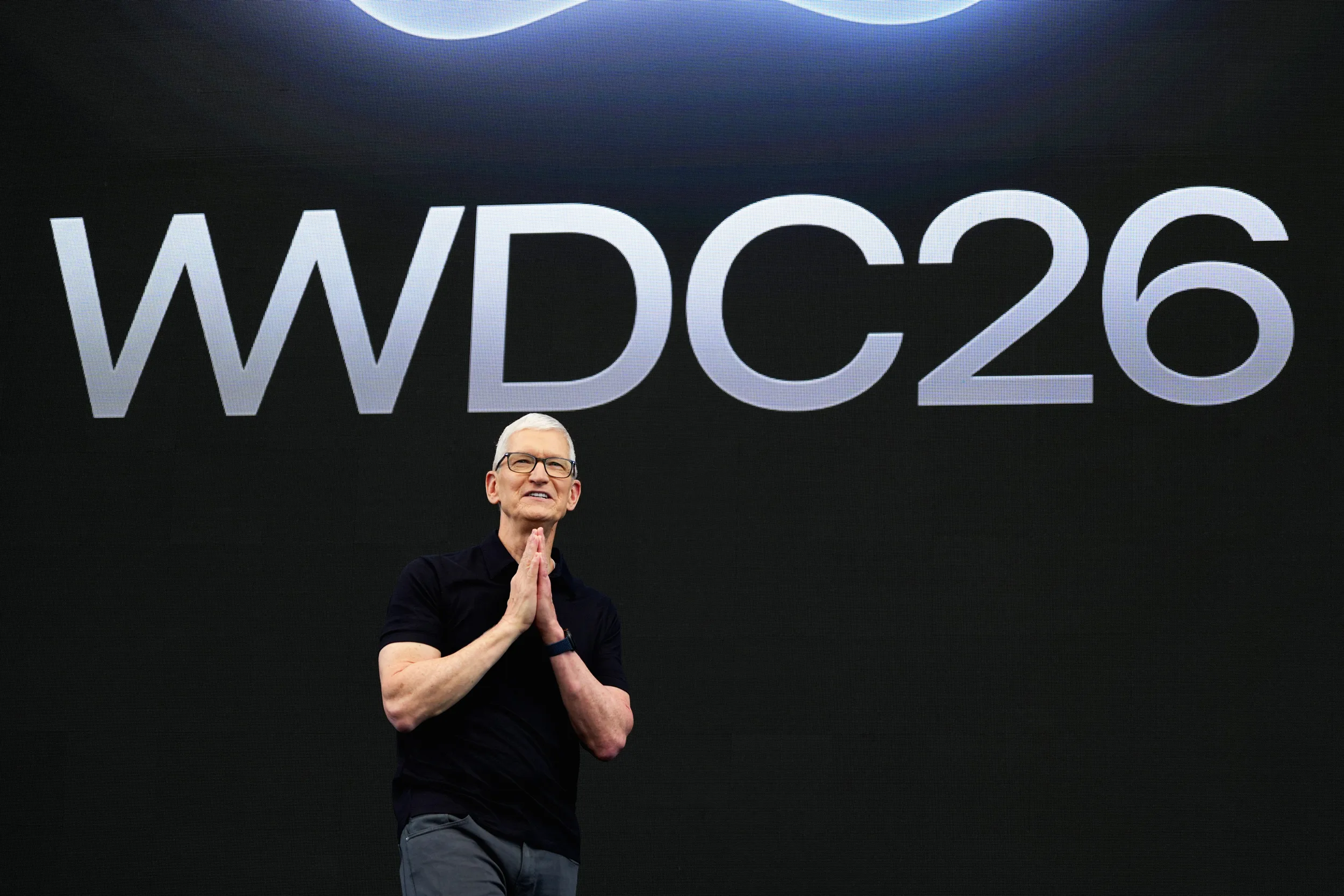
WWDC 2026 was also a farewell. Tim Cook led his final keynote as chief executive officer: on September 1, he hands the role to John Ternus, currently Apple’s head of hardware engineering.
The final versions arrive in September, alongside the next iPhone lineup, following the usual schedule. Until then, Apple is opening a beta period so developers can test and refine the new features. Siri AI will debut in English; the rest of the languages, including Spanish, still have no date.
After two years of promising a Siri that never quite arrived, Apple finally showed something credible: a serious architecture, integrated across the entire ecosystem and built around its obsession with privacy. The problem is no longer the vision, but the execution. Whether the new Siri works as well in the real world as it did on stage remains the open question.
No comments yet. Be the first!


