MacBook Ultra: Apple Splits the Lineup with OLED, Touchscreen, and a 2nm M6
Gurman and Macworld agree: the next OLED MacBook with a touchscreen and 2nm M6 will be a new tier above the Pro, not its successor.
1 May 2026
Index
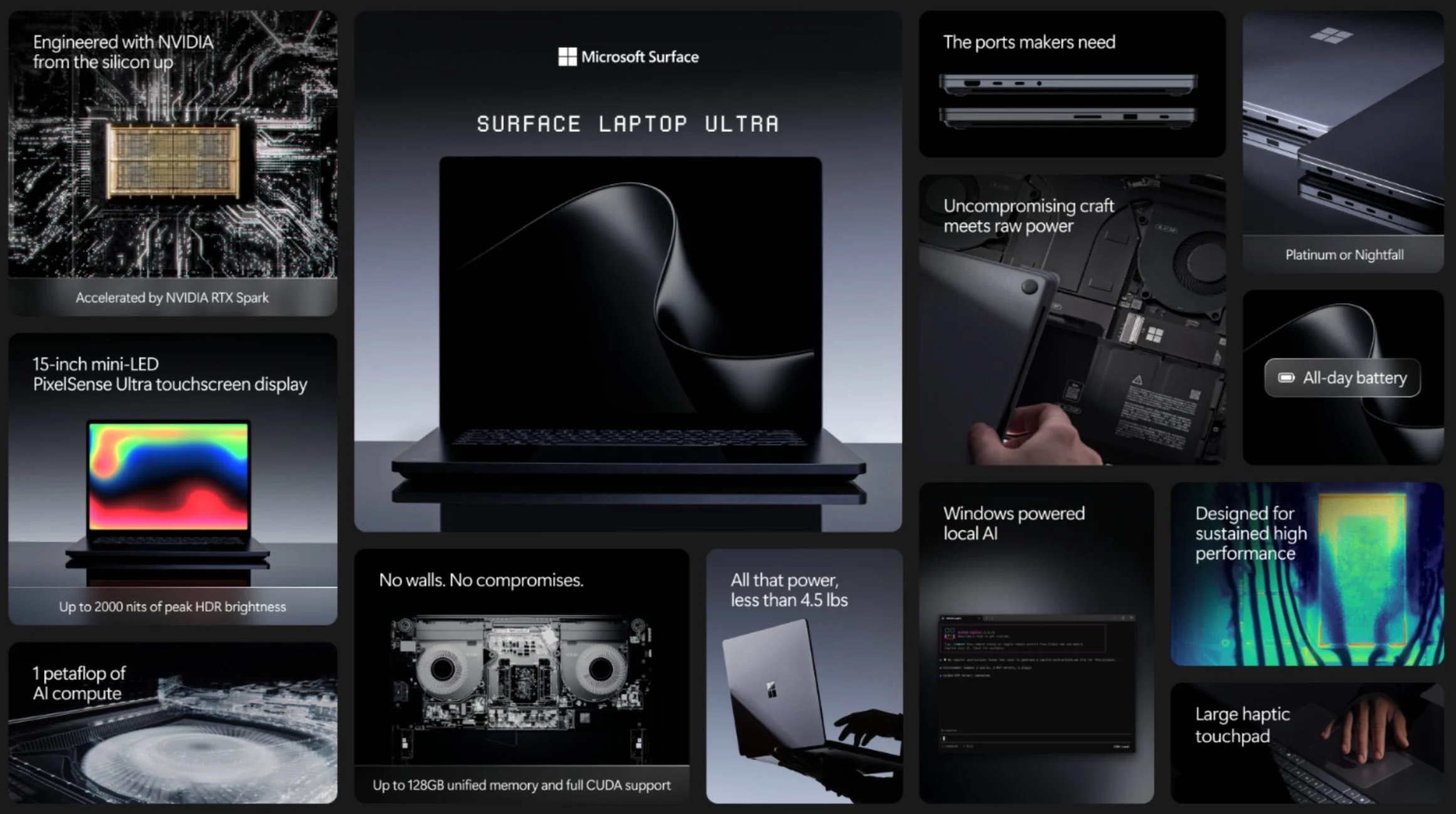
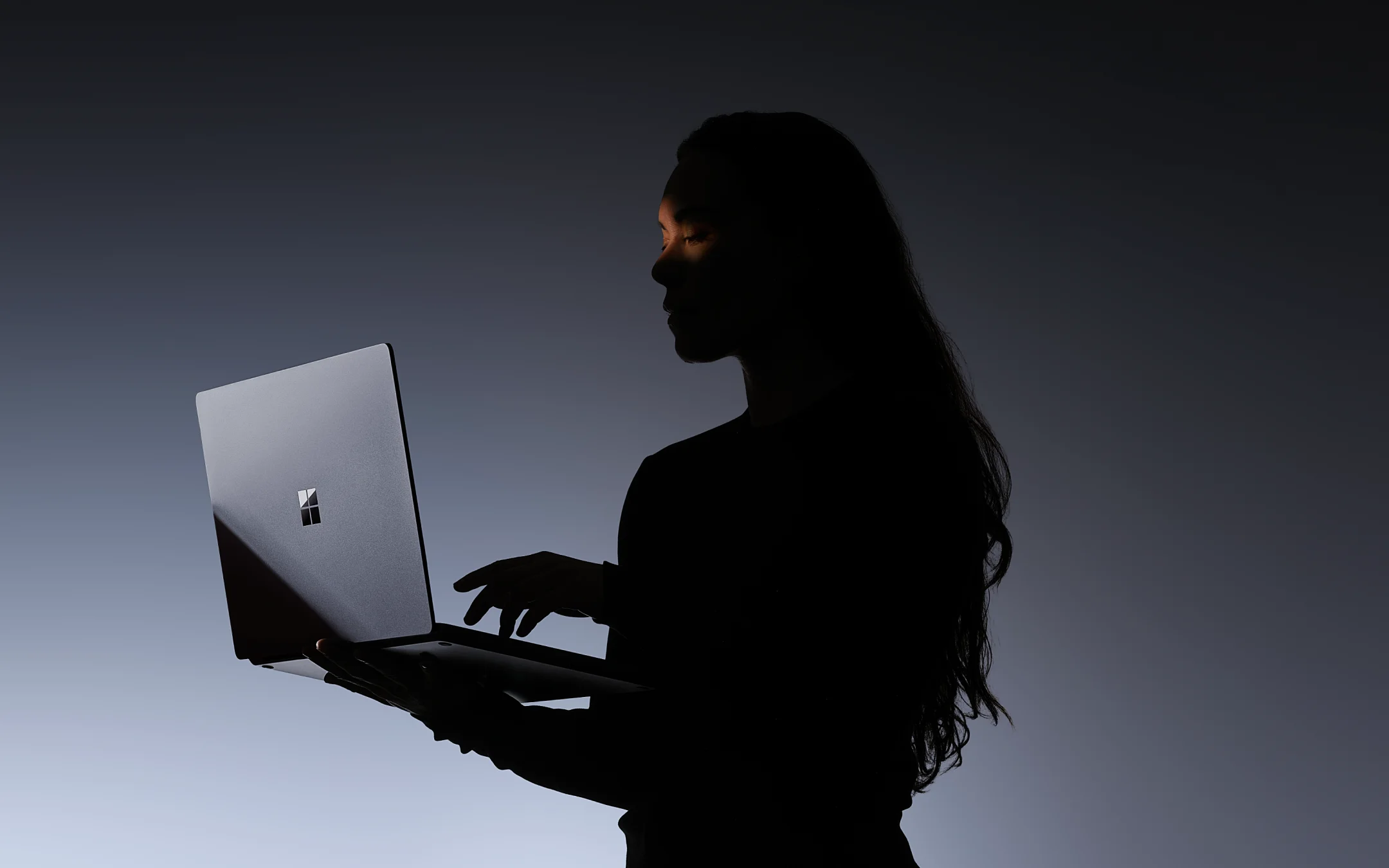
Microsoft announced the Surface Laptop Ultra at Computex 2026, its most powerful laptop and the first in its history to move away from Intel and AMD and run on NVIDIA silicon. The shift is hard to overstate: for the first time, a Surface can go toe-to-toe with a MacBook Pro in heavy compute workloads, with AI developers and creators squarely in its sights. The company presents it as the machine for "world makers" and, while for now it is more of a preview than a finalized launch, it is enough to change the conversation about what a Windows laptop can be.
Video: Microsoft.
What the Surface Laptop Ultra is and why it matters
For years, premium Surface devices sat one step below the latest hardware: neither the Surface Book nor the Laptop Studio ever competed at the very top. The Surface Laptop Ultra breaks that mold because it is built around the NVIDIA RTX Spark platform from end to end, not as a GPU tacked on at the end: it is Microsoft’s first device designed "from the silicon outward" around an NVIDIA chip.
The move carries both symbolic and technical weight. For decades, Windows PC processors were Intel and AMD territory; here, NVIDIA enters with an architecture designed for the local AI wave, and Microsoft is backing it with operating system-level changes to get the most out of it. The positioning is direct: Microsoft’s answer to the MacBook Pro for developers and creators.
Imagen: Microsoft.
Design, ports, and touchpad
Surface Laptop Ultra
La laptop más potente de Microsoft y la primera de su historia con silicio NVIDIA: un chip RTX Spark con GPU Blackwell, hasta 128 GB de memoria unificada y pantalla mini-LED de 2.000 nits, posicionada como rival de la MacBook Pro para desarrollo de IA y creación.
Googlebook: what’s confirmed, what leaked, and what Google held back from the announcement
Google announced Googlebook on May 12: a new premium category with five manufacturers and OS Aluminium, but no official specs or pricing. What it confirmed, what leaked, and what’s still missing.
We review the MacBook Air M2 (2022). A complete redesign that drops the wedge shape, adds MagSafe, and debuts the powerful Apple Silicon M2 chip.
14 August 2022
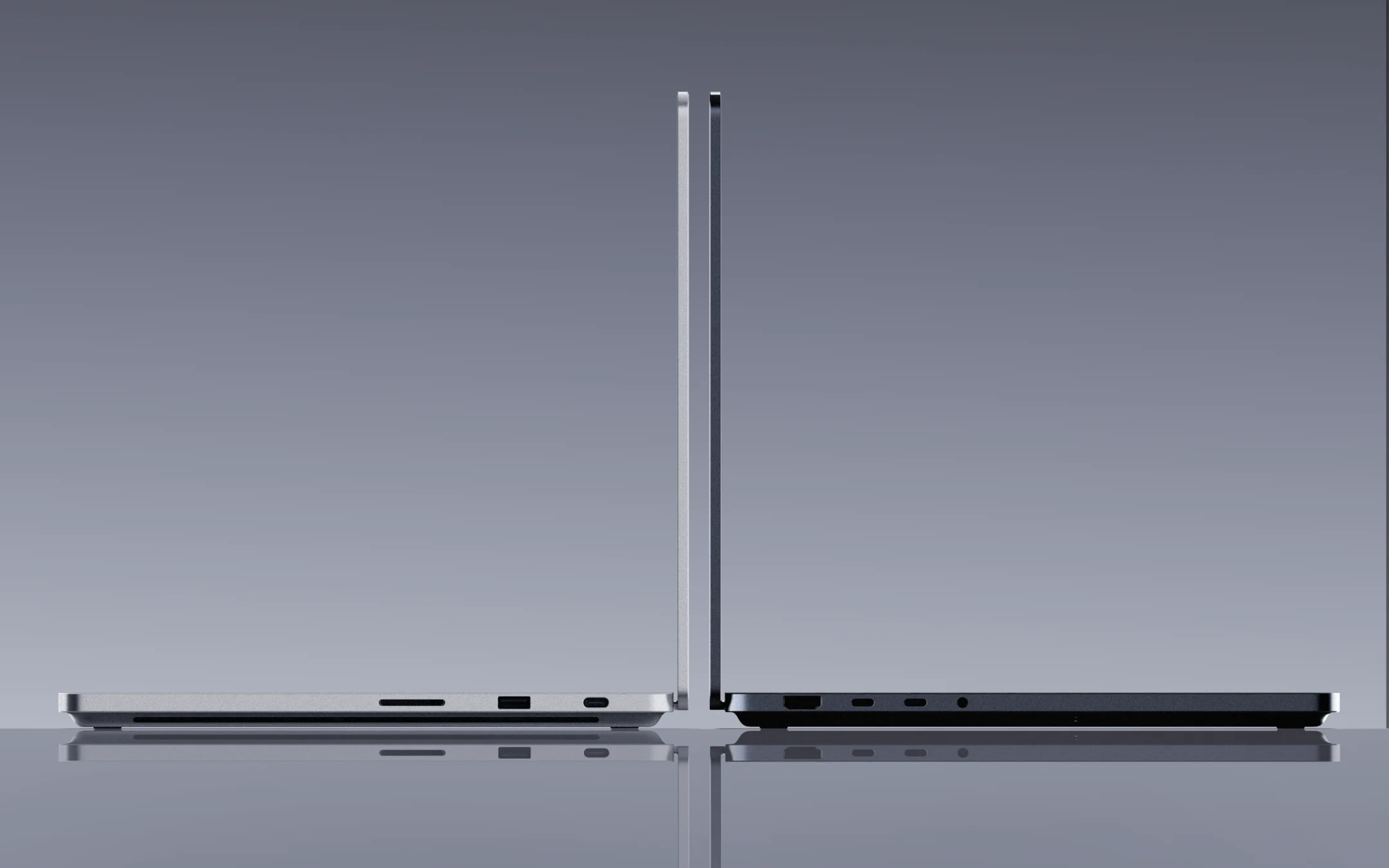
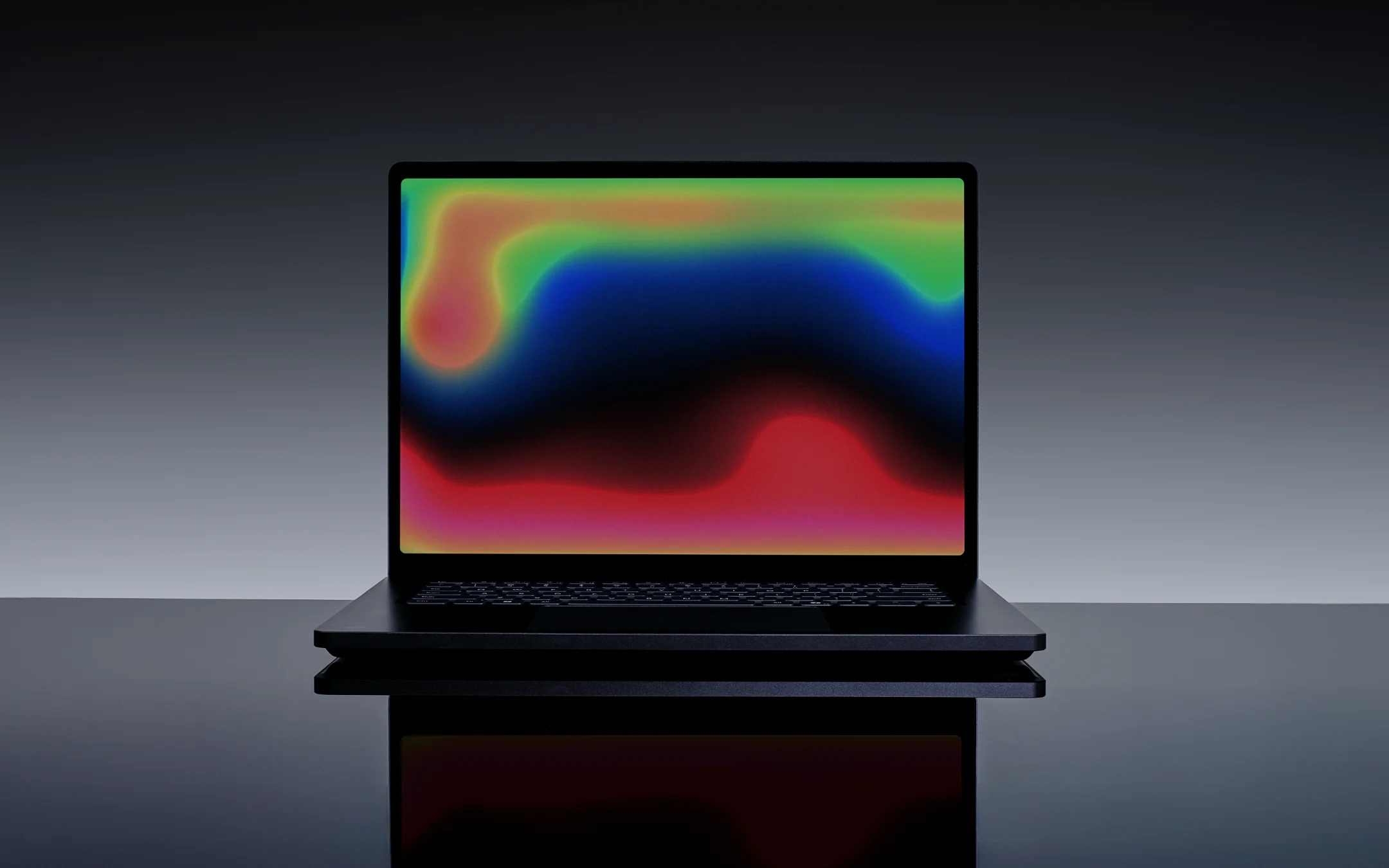
It measures less than 18 mm thick and weighs under 4.5 pounds (2 kg), in two finishes: Platinum (silver) and a new Nightfall (black) that steals every photo. One honest nuance noted by the press: 4.5 pounds is not a record for lightness, but rather the reasonable cost of putting this hardware into a slim body.
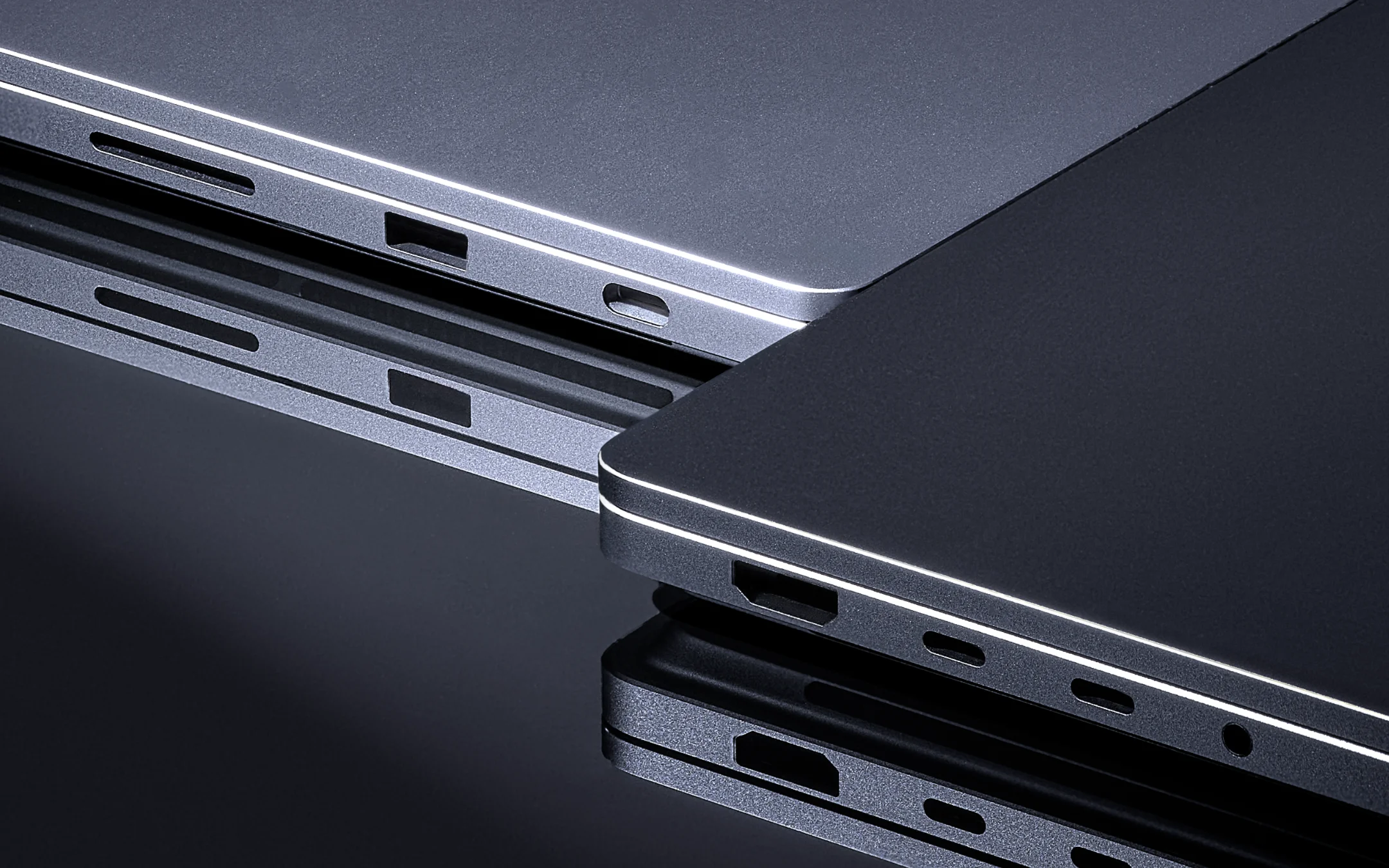
In a world of laptops that force you to carry dongles, it includes a full set of ports in the chassis: HDMI, USB-C, USB-A, a full-size SD card reader, and a headphone jack, exactly what a creator needs in the field. The touchpad also grows: haptic and more than 30% larger than the previous one, the largest ever put in a Surface.
Imagen: Microsoft.
Imagen: Microsoft.
Imagen: Microsoft.
The NVIDIA leap: RTX Spark and 1 petaflop
Here is the heart of the announcement. The RTX Spark chip combines a CPU with up to 20 cores and a Blackwell GPU with 6,144 CUDA cores, connected via NVLink C2C, plus up to 128 GB of unified LPDDR5X memory with up to 300 GB/s of bandwidth. Altogether, it delivers up to 1 petaflop of AI compute, with a GPU on the level of an RTX 5070 and the ability to run models of up to 120 billion parameters locally.
Unified memory is what defines this machine as "Ultra": instead of splitting system RAM and video memory into fixed compartments, it dynamically allocates that 128 GB pool between CPU and GPU depending on what each task requires. It is the same principle used by Apple and Qualcomm, and now NVIDIA is joining in. RTX Spark is a new platform worthy of a separate article; the fact that the Surface Laptop Ultra is among the first devices to debut it is already news.
Imagen: Microsoft.
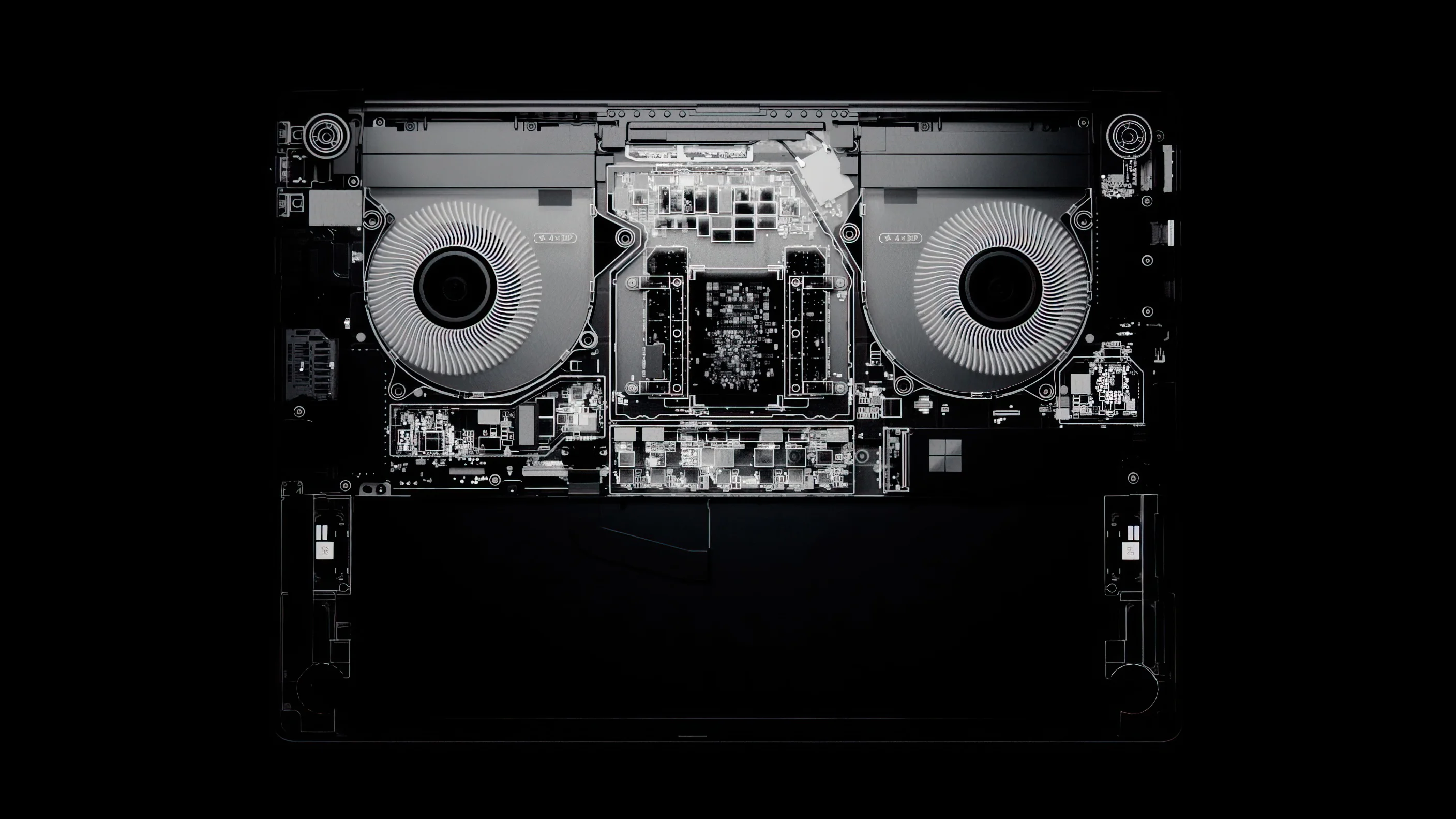
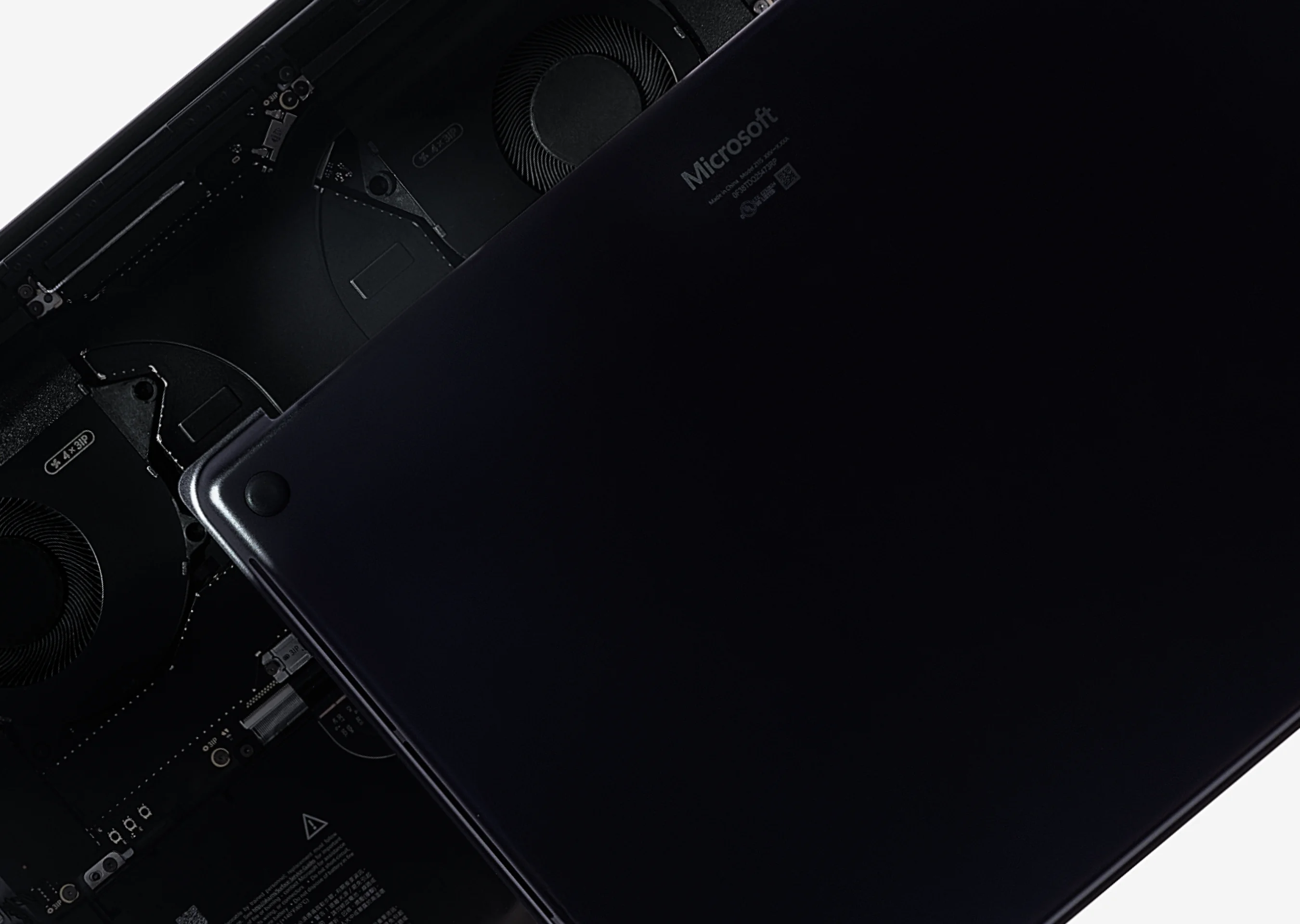
That power demands cooling to match. Microsoft redesigned the thermal system with dual ventilation and up to 2.5 times the heat dissipation capacity of the 15-inch Surface Laptop 7th Edition, targeting sustained performance: handling long renders or compilations without the aggressive throttling of older high-performance laptops.
Display: the brightest Microsoft has ever made
It features a 15-inch PixelSense Ultra mini-LED panel, 2880 x 1920 resolution, 262 ppi, and a 3:2 aspect ratio, taller than the typical 16:9 and better for work. It reaches up to 2,000 nits of peak HDR brightness, the brightest display Microsoft has ever put in a Surface. This is not just a spec-sheet number: it is designed for people making critical color and exposure decisions, where brightness and color accuracy translate into trusting what you see while editing.
Imagen: Microsoft.
Local AI: the end of "token anxiety"
Microsoft focused on running AI models on the device itself. The idea, in its words, is to cure "token anxiety": experimenting without watching the cloud cost meter, with lower latency and greater privacy because the data never leaves the device. When frontier intelligence is needed, it scales to the cloud; the rest of the time, everything runs locally.
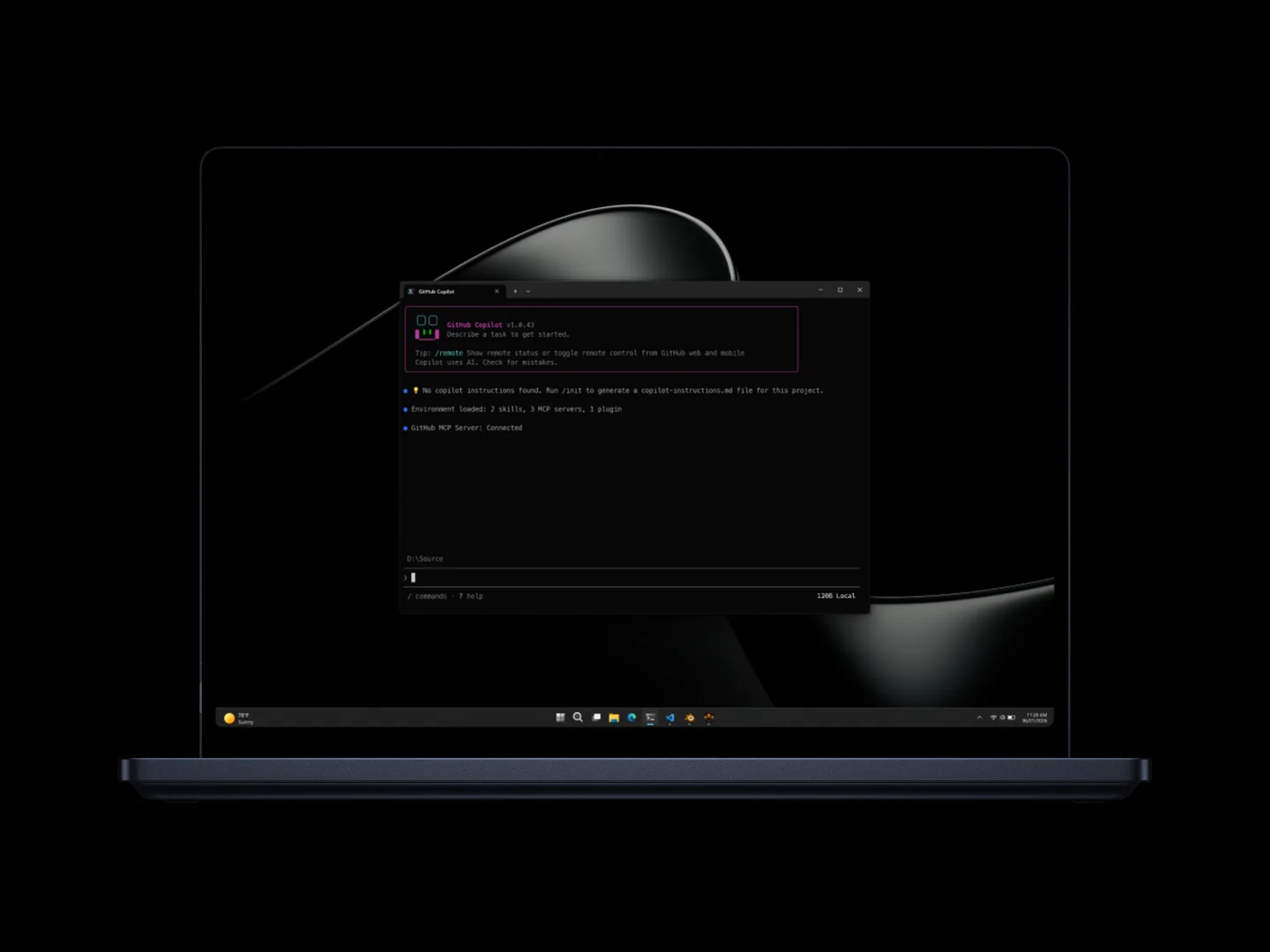
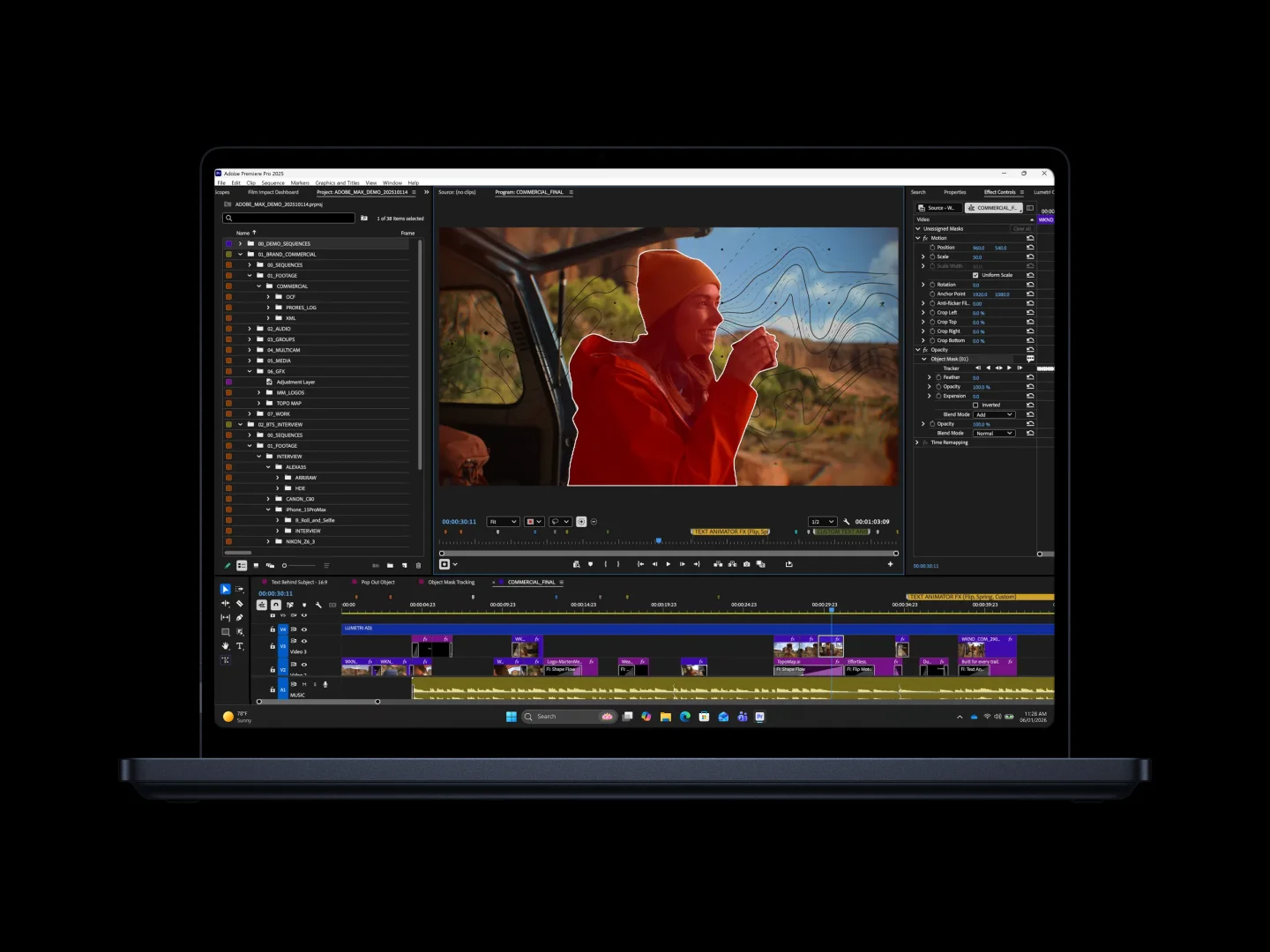
This connects with the wave of AI agents, assistants that perform actions for you such as debugging code. For that era, Microsoft is adding containment primitives: sandboxing that limits which data each agent can access and prevents it from touching the core of the system. In practice, apps can use the GPU for noise reduction, intelligent masking, video upscaling, and code autocomplete, all on-device.
Imagen: Microsoft.
Imagen: Microsoft.
Repairability: the angle almost no one is watching
One detail went almost unnoticed in the coverage and deserves attention. The Surface Laptop Ultra is designed to be repairable: a user-replaceable SSD, internal markings that guide repairs, published service guides, and replacement parts sold through Microsoft Store and iFixit.
That matters more than it may seem. In an era when memory is soldered and unified architecture pushes everything onto the chip, keeping storage serviceable runs counter to the industry trend. The benefit is concrete: a device that grows with the user, less friction in enterprise environments, and a longer useful life. The fact that NVIDIA and unified memory did not eliminate the replaceable SSD is a design decision worth appreciating.
Imagen: Microsoft.
What Microsoft is targeting and who it is standing against
A clarification is useful before comparing: all the figures Microsoft showed are for the top-end configuration, the famous "up to" numbers. The 20 cores, 6,144 CUDA cores, and 128 GB are the maximum configuration announced, not a specific one. The company has not yet detailed what the base model will look like or what it will cost, so any comparison is against that ceiling, not against an entry-level version that does not yet exist on paper.
With that caveat, the Surface Laptop Ultra’s natural rival in its maximum configuration is the MacBook Pro with the M5 Max chip: both occupy the same portable workstation territory, with 128 GB of unified memory and a top-tier GPU aimed at local AI and heavy creative work. Where Apple offers 40 GPU cores and 614 GB/s of bandwidth, NVIDIA responds with 6,144 CUDA cores and full CUDA compatibility, a huge advantage for anyone developing in that ecosystem. The M5 Pro, with its 64 GB ceiling, plays one tier below.
The other front is within Windows itself: Qualcomm’s Snapdragon X2 Elite Extreme, currently the dominant ARM chip on the platform. There, the fight is not so much about raw power (NVIDIA is aiming higher, at the segment with dedicated GPUs) but about where Windows on ARM is headed. The difference is that the Ultra adds a Blackwell GPU no Snapdragon offers, in exchange for power consumption and pricing that promise to be considerably higher.
The uncomfortable conclusion is the same for all three: on paper, the Surface Laptop Ultra sits at the big players’ table, but almost everything is "up to," with no confirmed price or independent benchmarks, while the M5 Max is already on the market and tested. The promise is enormous; the verification is still pending.
The fine print: what the announcement does not shout
Behind the "1 petaflop" headline are three asterisks.
It is Windows on ARM. It does not run x86 natively: it uses the Prism emulation layer for software that has not yet been ported to ARM, historically the platform’s Achilles’ heel. It has improved significantly (there is already native anti-cheat, and games like Valorant and League of Legends are arriving, with Prism tuned for RTX Spark), but it is worth keeping in mind if your workflow depends on old or very specific programs.
There is no price. Microsoft dodged the most obvious question and said it will discuss pricing closer to launch, due to volatility in the RAM and NAND markets. The read from the tech press is unanimous: it will land at the very premium end, especially the 128 GB model.
Copilot+ remains ambiguous. It was not clear whether it combines a dedicated NPU with the RTX GPU or relies only on the GPU for AI features. Microsoft presents it as a Copilot+ PC but left loose ends. And it is a pre-launch product, even subject to FCC approval before it goes on sale.
Imagen: Microsoft.
Conclusion: revolution or expensive preview?
This is the most ambitious Windows hardware announcement in years. For the first time, Microsoft has a laptop that, on paper, measures up to Apple’s best for AI and heavy creative work, and the break with Intel and AMD signals where Windows is heading. The bet on repairability, in an industry where everyone solders and seals, adds to its case.
But today it is a promise with conditions: ARM emulation has to survive the real world, the price threatens to be extremely high, and "all-day" battery life remains marketing with an asterisk. The real test arrives when the device is on shelves, with independent benchmarks and a full lineup announced, later this year. If it delivers even half of what it shows, the conversation around powerful laptops will no longer belong only to Apple. If not, it will be the most impressive preview we could not buy.