Googlebook: what’s confirmed, what leaked, and what Google held back from the announcement
Google announced Googlebook on May 12: a new premium category with five manufacturers and OS Aluminium, but no official specs or pricing. What it confirmed, what leaked, and what’s still missing.
Google introduced the Google Home Speaker, its first smart speaker built around Gemini. Preorders open on June 17, and it goes on sale on June 25 for US$99.99 (€119.99 in Europe). It is the first audio device designed for Gemini for Home, the assistant replacing Google Assistant on the brand’s speakers and displays.
Google is promoting a driver that is twice as large and bass that is 2.5 times more powerful. But that comparison is against the Nest Mini, the smallest speaker in its lineup, not against the Nest Audio, which this model is also discontinuing.
Imagen: Google.
What the Google Home Speaker is
The Home Speaker is the centerpiece of the new generation of AI-powered Google Home devices. It replaces two products at once: the US$49 Nest Mini and the US$99 Nest Audio, both discontinued. In price, it lands where the Nest Audio used to be, but with a different approach: instead of a speaker focused on music, Google presents it as the smart home control center, with Gemini inside.
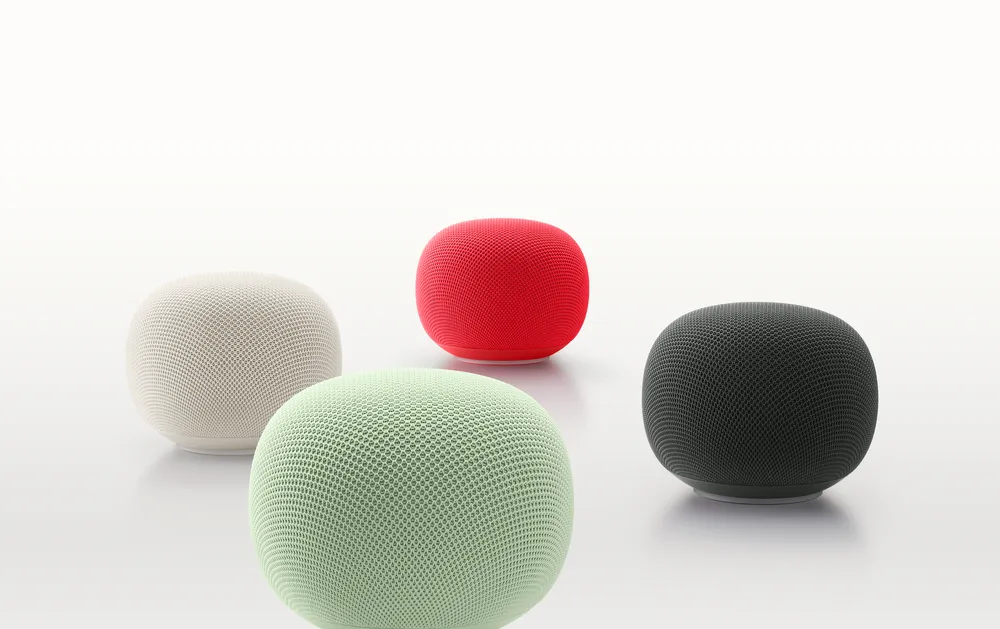
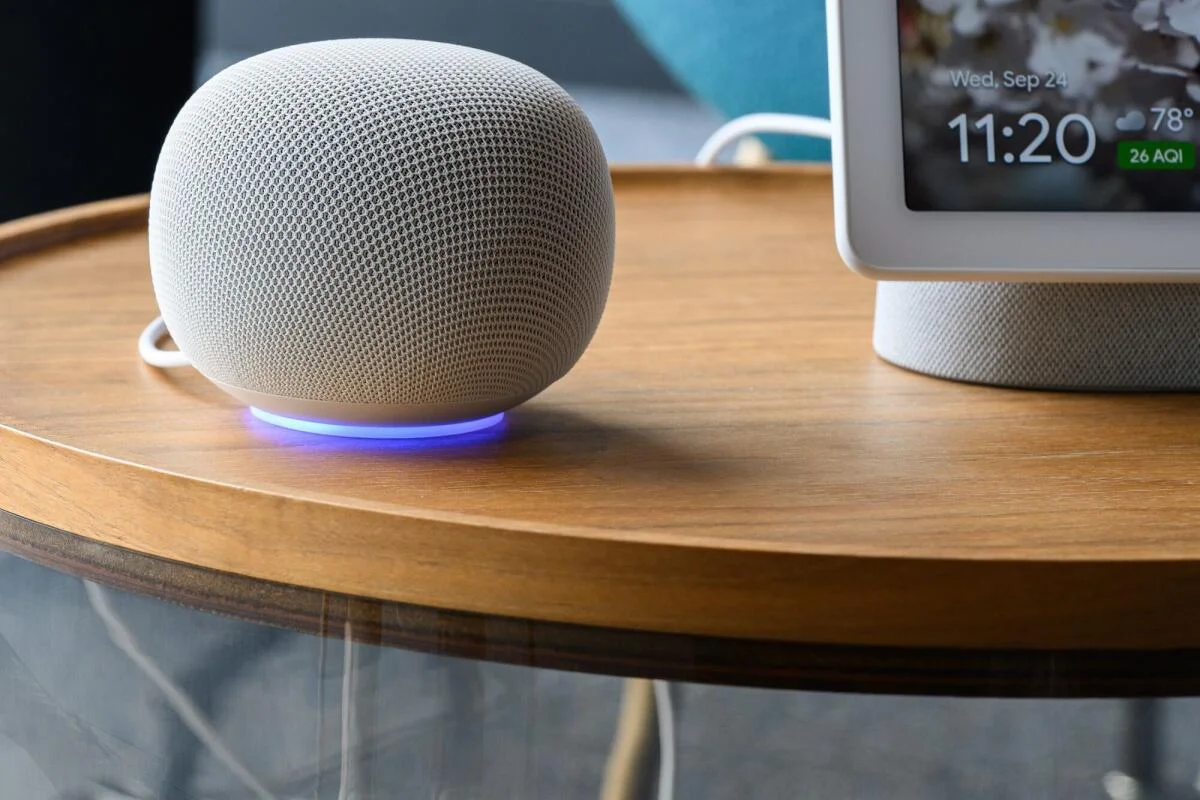
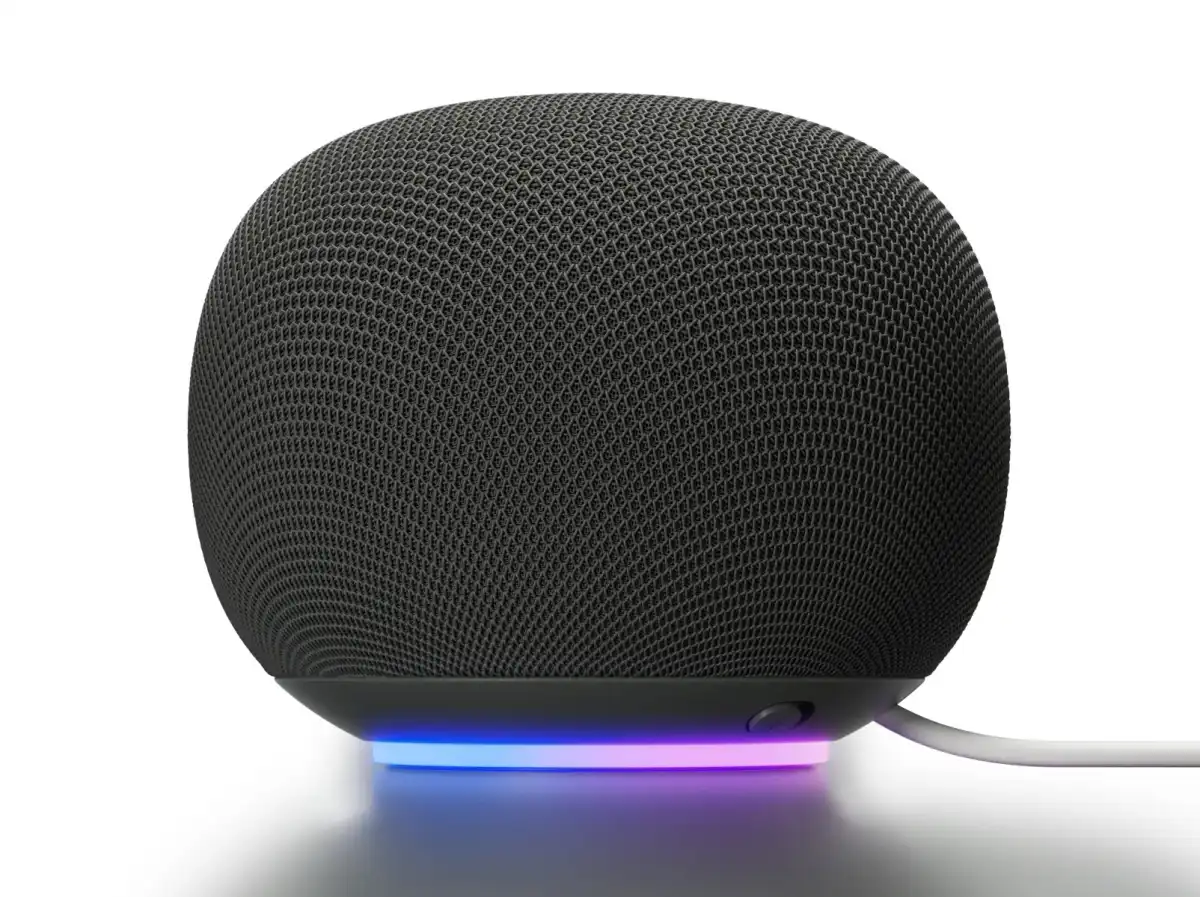
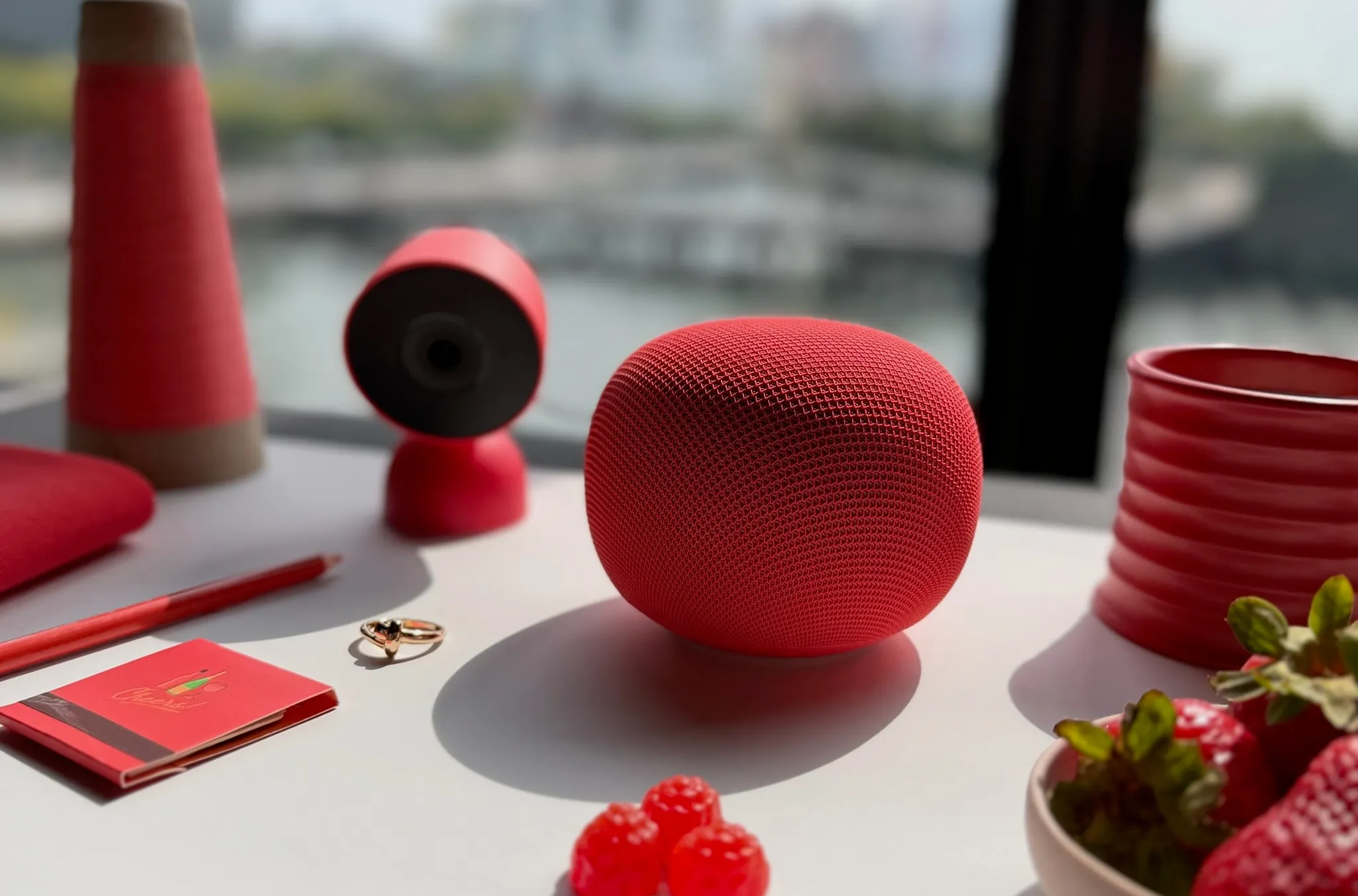
Its body is a mesh sphere covered in 3D-knit fabric, with no screen. The visible difference versus the previous generation is at the bottom: a light ring that turns on when the assistant is listening, thinking, or responding.
Imagen: Google.
Gemini for Home, the reason it exists
The deeper change is the assistant. Gemini for Home understands natural language and moves beyond rigid commands. You can ask it for several things in a single sentence —"dim the kitchen lights, play calm music, and set a 20-minute timer"— or correct yourself mid-sentence and still be understood. It also handles multi-step questions: if you ask about the weather during your team’s next game, it figures out when and where they play before answering. It keeps the context of the conversation, so you can ask follow-up questions without repeating everything. It launches with 10 new voices.
Google Home Speaker
El primer altavoz inteligente de Google construido para Gemini, con sonido 360°, anillo de luz y funciones de centro de domótica.
$99.99 USD
AsistenteGemini for Home
DriverTransductor full-range de 58 mm
Sonido360° omnidireccional
ProcesadorQuad-core Cortex-A55
RAM1 GB
Micrófonos3 de largo alcance + interruptor de mute
ConectividadWi-Fi 6 y Bluetooth 5.4
ThreadRouter fronterizo 1.3 integrado
Hogar inteligenteHub Matter
Controles3 zonas táctiles (volumen y reproducción)
IluminaciónAnillo de luz en la base
AlimentaciónCable cautivo USB-C (1,5 m) y adaptador de 30 W
Dimensiones10,7 × 8,6 cm (diámetro × altura)
MaterialesTejido 3D-knit
Pros
Gemini for Home entiende lenguaje natural y encadena varias órdenes en una sola frase.
Funciona como centro de domótica con hub Matter y router fronterizo Thread integrado.
Más volumen y graves que el Nest Mini, con sonido 360° y anillo de luz de estado.
Se empareja con el Google TV Streamer para sonido envolvente en el living.
Cons
Un solo driver de 58 mm: no iguala el woofer y el tweeter dedicados del Nest Audio que reemplaza.
No hace falta comprarlo para tener Gemini: el asistente llega por software a los Nest desde 2016.
Las funciones más interesantes (Gemini Live, historial de cámaras, resúmenes) van detrás de la suscripción Google Home Premium.
Precio elevado: el doble que el Nest Mini en su lanzamiento.
No se vende en ningún mercado de LATAM por ahora.
Editorial Disclosure
Information based on official specs. The author has not had physical access to the product for this report.
Pixel Fold 2, Watch 4, and Buds 2a: Google's next ecosystem
Everything about the refresh of the Google ecosystem: a slimmer Pixel Fold 2 with Tensor G4, Pixel Watch 4 with 3,000 nits of brightness, and the new Buds 2a.
Apple vs. ChatGPT, Claude, and Gemini: why Apple isn't playing the same game
Apple does not want to be ChatGPT, Claude, or Gemini. While OpenAI, Anthropic, and Google compete to build the best model, Apple is betting on being the platform where they all run. Why this is a different strategy.
16 June 2026
There is one point Google does not emphasize but is worth knowing: you do not need to buy the Home Speaker to get Gemini. The assistant is rolling out via software to nearly all of the brand’s speakers and displays made since 2016, including the Nest Mini and Nest Audio. The difference is that the full experience —with Gemini Live and more fluid conversation— is reserved for recent hardware and, in several cases, a subscription. One advantage for the region: Gemini for Home already works in Spanish, while Apple’s new Siri starts only in English.
Imagen: Los Angeles Times.
Design and colors
The mesh sphere inevitably brings Apple’s HomePod mini to mind: the same rounded shape, the same textile finish. The bottom light ring, however, is closer to Amazon’s Echo Dot. On top there are three capacitive touch zones: the sides control volume, and a tap in the center plays or pauses. For privacy, a physical switch cuts off the microphones.
It measures 10.7 cm in diameter by 8.6 cm tall and is powered by a 1.5-meter captive cable ending in USB-C, plus an included 30 W adapter.
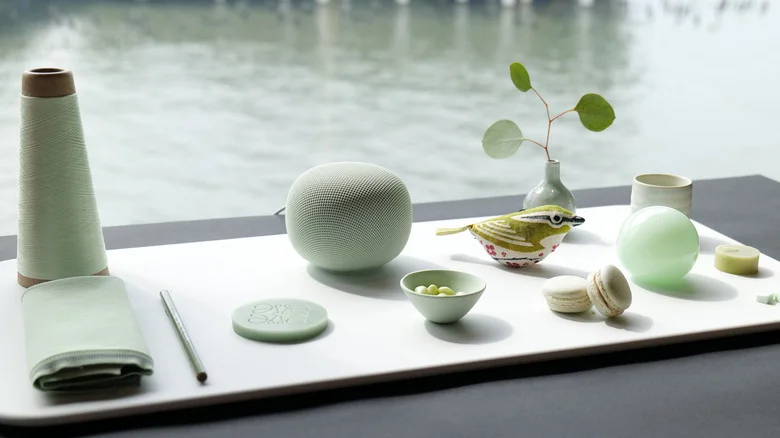
It comes in four colors, with one important limitation: Hazel and Porcelain are available worldwide, while Jade and Berry are exclusive to the U.S. store.
Imagen: Google.
Sound: 360° with a single driver
Here is the nuance that matters most if you are looking for a speaker for music. The Home Speaker uses a single 58 mm full-range transducer that fires in every direction —Google’s 360° sound. Compared with the Nest Mini, it is a real leap: a larger driver and more bass.
But the Home Speaker is also retiring the Nest Audio, and that model used a two-way setup —a 75 mm woofer plus a dedicated 19 mm tweeter— designed for music. Moving to a single omnidirectional driver may be a step backward in audio architecture, although Google has not yet published power output or frequency response to confirm it with numbers.
For something more ambitious, two Home Speaker units can be paired with a Google TV Streamer to create surround sound in the living room. Three far-field microphones and a new audio processor make sure Gemini can hear you even when there is noise.
Imagen: Google.
Google Home Speaker vs Nest Mini
Google publishes its own comparison chart and pits the Home Speaker against the Nest Mini. It helps place each one:
Google Home Speaker
Nest Mini
Assistant
Gemini for Home
Google Assistant
Driver
58 mm full-range
40 mm full-range
Sound
360°
360°
Microphones
3 far-field
3 far-field
Light ring
On the base
4 LEDs on top
Thread border router
Yes
No
Matter hub
Yes
Yes
Pairs with Google TV Streamer
Yes
No
Dimensions
10.7 × 8.6 cm
9.8 × 4.2 cm
Price
US$99.99 / €119.99
US$49 / €59 (launch)
The Nest Mini is listed with Google Assistant, but it will also receive Gemini for Home via software, in a more limited version. The table leaves out the Nest Audio, the other speaker the Home Speaker replaces and the one that truly competed on sound.
Price, subscriptions, and availability
The Google Home Speaker costs US$99.99 (€119.99 in Europe), twice what the Nest Mini cost at launch. Anyone who preorders it before September 30 gets six months of Google Home Premium at no charge, a value of about US$60.
That subscription is key to understanding the model. Google Home Premium replaces Nest Aware and expands to cover the entire home: the basic assistant is included, but the flashier features sit behind the paywall. Gemini Live —free-flowing, continuous conversation—, search across Nest camera history, and daily summaries of what happened at home require the subscription.
Availability is the weak point for the region. The Home Speaker launches on June 25 in the United States, Canada, the United Kingdom, Ireland, France, Spain, Italy, the Netherlands, Denmark, Norway, Sweden, Finland, Belgium, Switzerland, Austria, Japan, Australia, and New Zealand. No Latin American country is on the list.
Conclusion
The Google Home Speaker is a good speaker for anyone already living in the Google ecosystem: it adds Gemini with natural language, works as a smart home hub with Matter and a Thread border router, and sounds better than the Nest Mini. In the markets where it is sold, it is the logical option to replace an old Nest.
For everyone else, some nuance is needed. If all you want is Gemini, you do not need to spend anything: the assistant is coming via software to the Nest devices you already have. And if you are looking for a speaker for serious music listening, a single 58 mm driver does not replace a two-way system like the one in the Nest Audio.
The bigger question remains: whether Google has managed to build a universal speaker with its best AI, or a consolidation that sacrifices dedicated audio along the way. The answer depends on what you want it for —and, in Latin America, on when (or if) it arrives.